Mass spectrometry (MS) is an analytical technique for determining the molecular constituents of pure or mixed gases, vapors, liquids, and even solids. By bombarding the sample with an electron beam, ions are generated and separated according to their mass-to-charge ratio. The resulting mass spectrum is a plot of intensity as a function of mass-to-charge ratio.
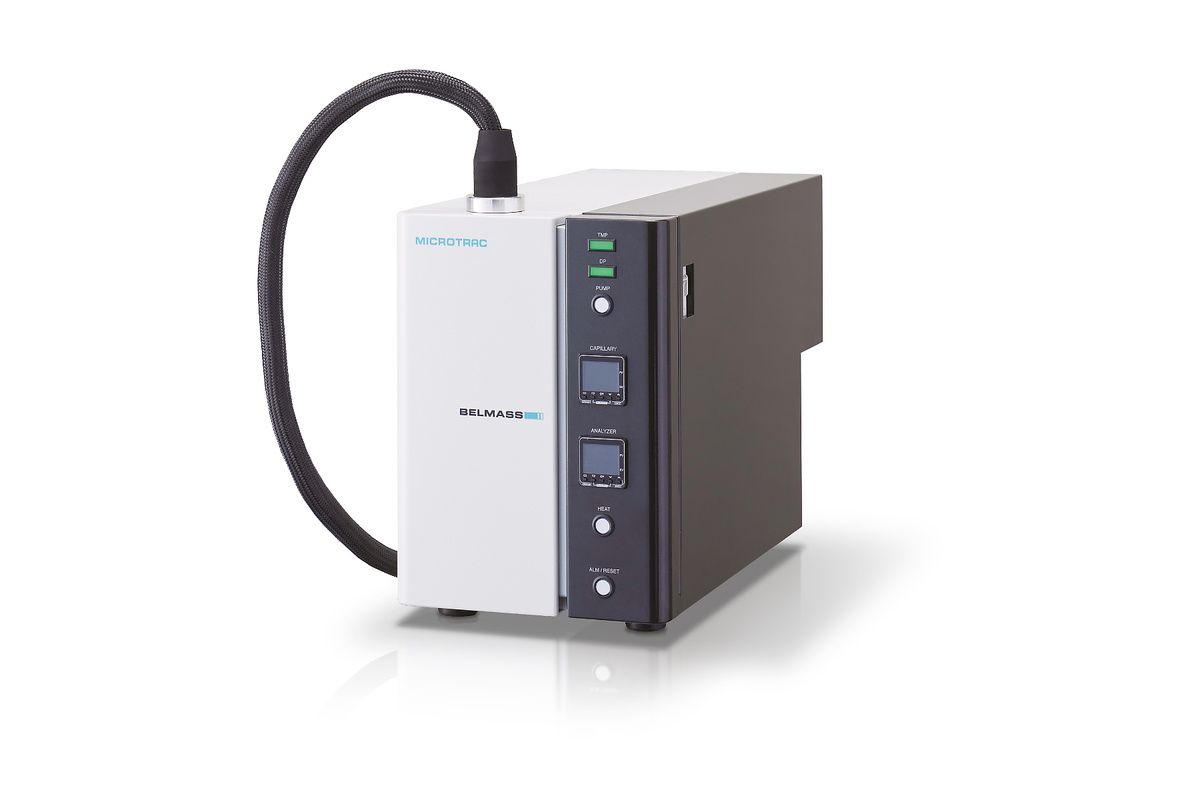
BELMASS II is a quadrupole mass spectrometer (QMS), a unique mass analyzer used in mass spectrometry. As a quadrupole, it consists of four cylindrical rods arranged parallel to each other. By applying an oscillating electric field to the rods, the ions are separated based on the stability of their trajectories as a function of their mass-to-charge ratio (m/z). An electron multiplier detects the deflected ions. BELMASS II can be combined with various instruments. Especially in combination with a BELCAT II it can provide important information about the species of the desorbed gases from gas/vapor mixtures and their breakthrough curves.
The mass detector is recognised to be the most efficient detector for qualitative analysis. However, it is difficult to obtain a good quantitative result because it analyzes only a small amount of gas.
By selecting the most suitable materials and components, Microtrac has successfully developed the mass spectrometer BELMASS II with a high quantitative capacity. Even ammonia gas can be analyzed by using a heated hose and a dry diaphragm pump.
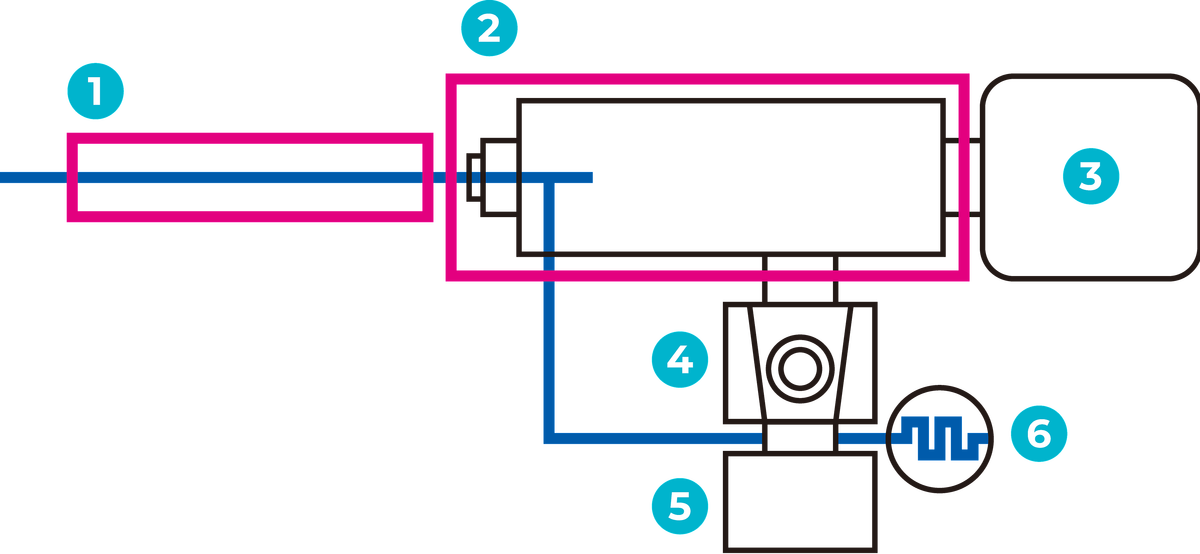
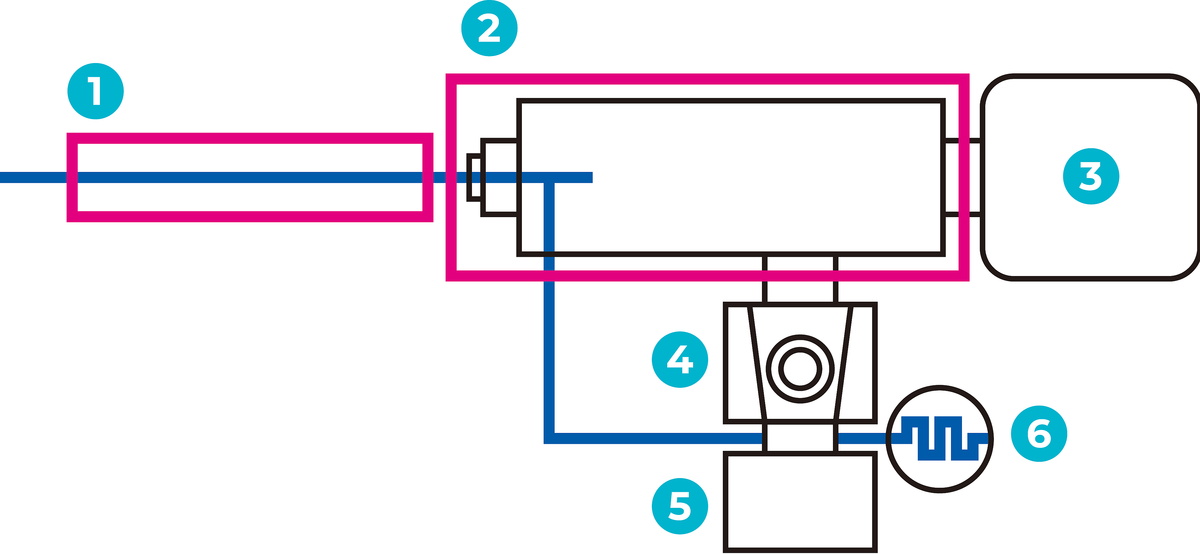
| 1. Sniffer probe | 2. Heat hose |
| 3. Mass analyzer | 4. Turbo molecular pump |
| 5. Diaphragm pump | 6. Vacuum gauge |
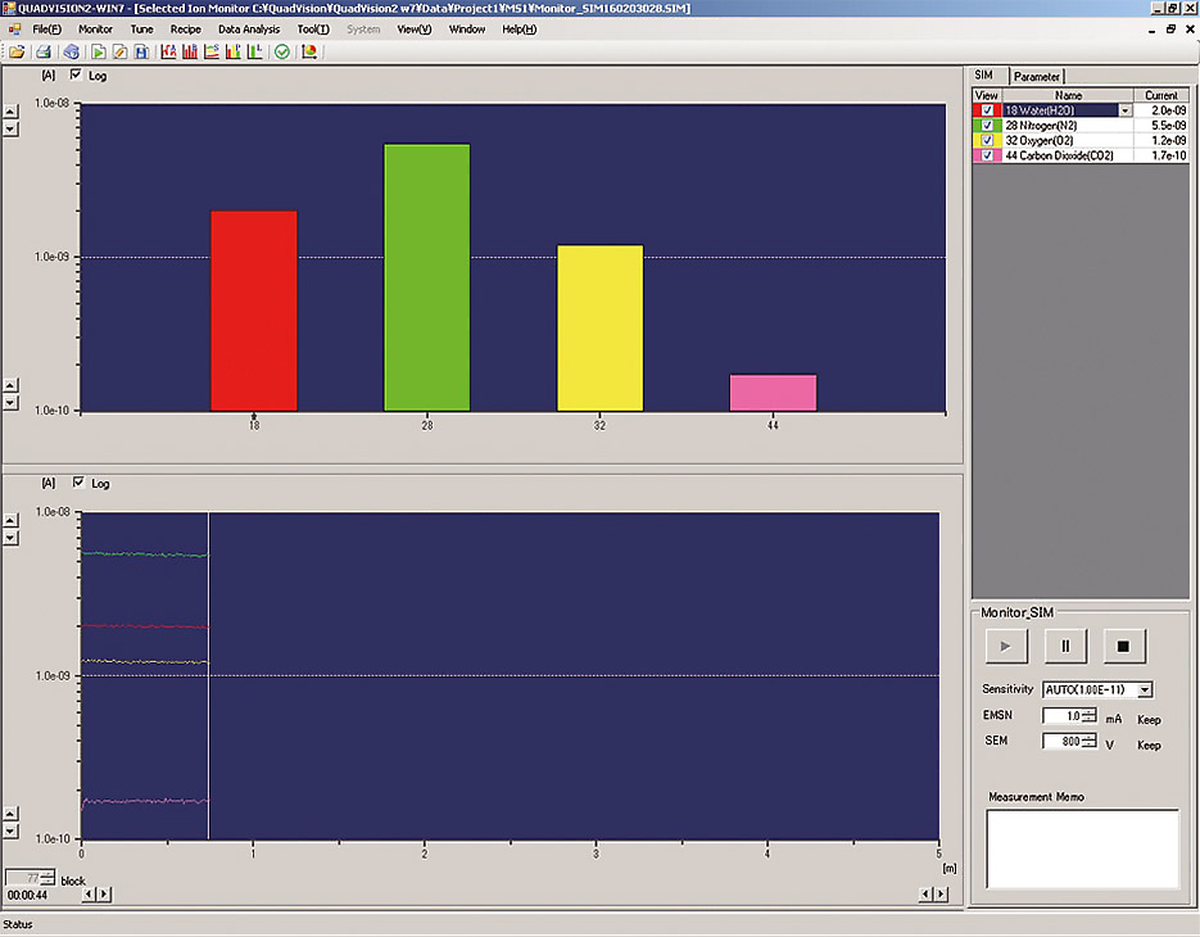
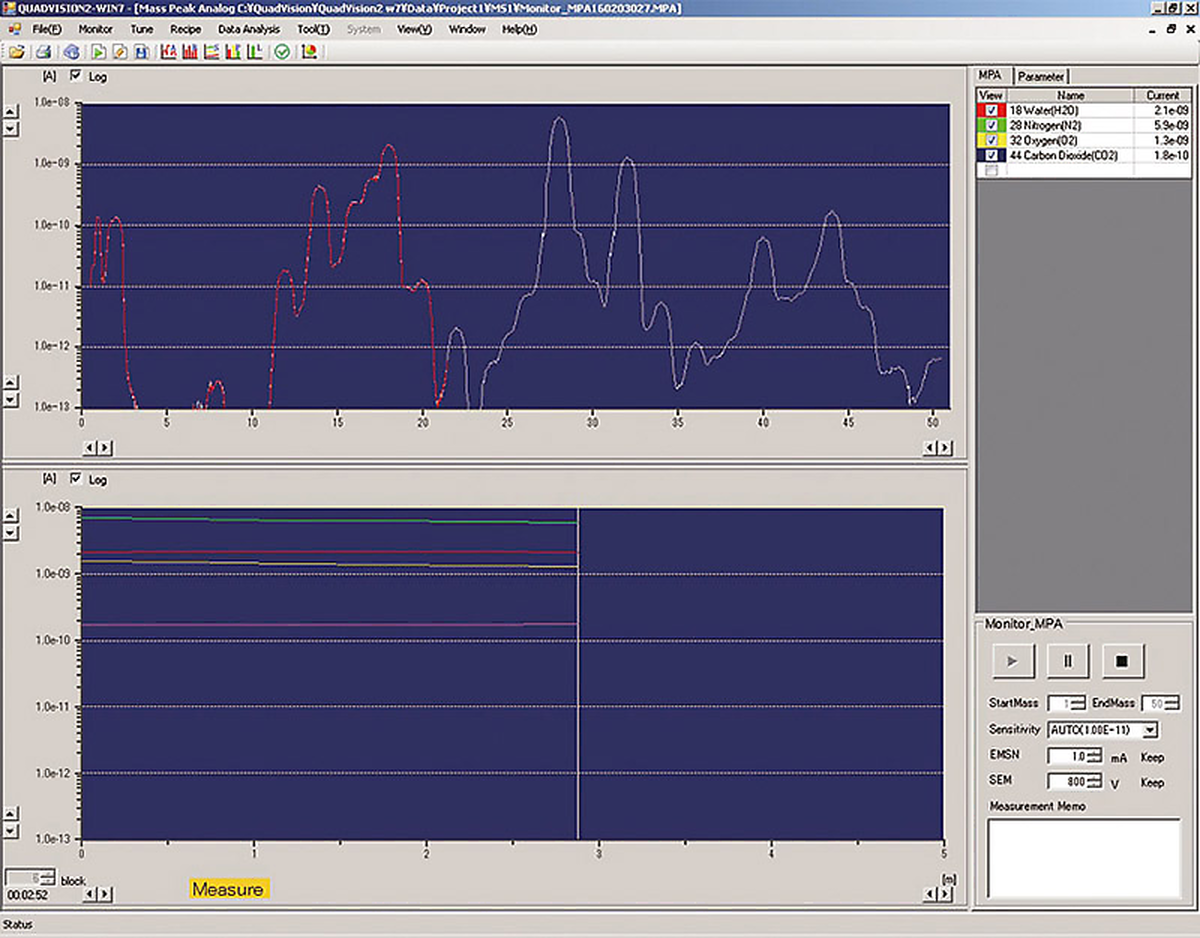
With the software of the BELCAT II, the current strength of the individual components is measured continuously, while the start and end of the measurement can be set within a certain time range via timer. Linear, logarithmic and automatic scaling are available for the vertical axis. External Data, such as temperature, can be imported via analog signal input providing even more details. For comprehensive evaluation of the catalytic reaction, the BELMASS II mass spectrometer can be connected to a BELCAT series catalyst analyzer.
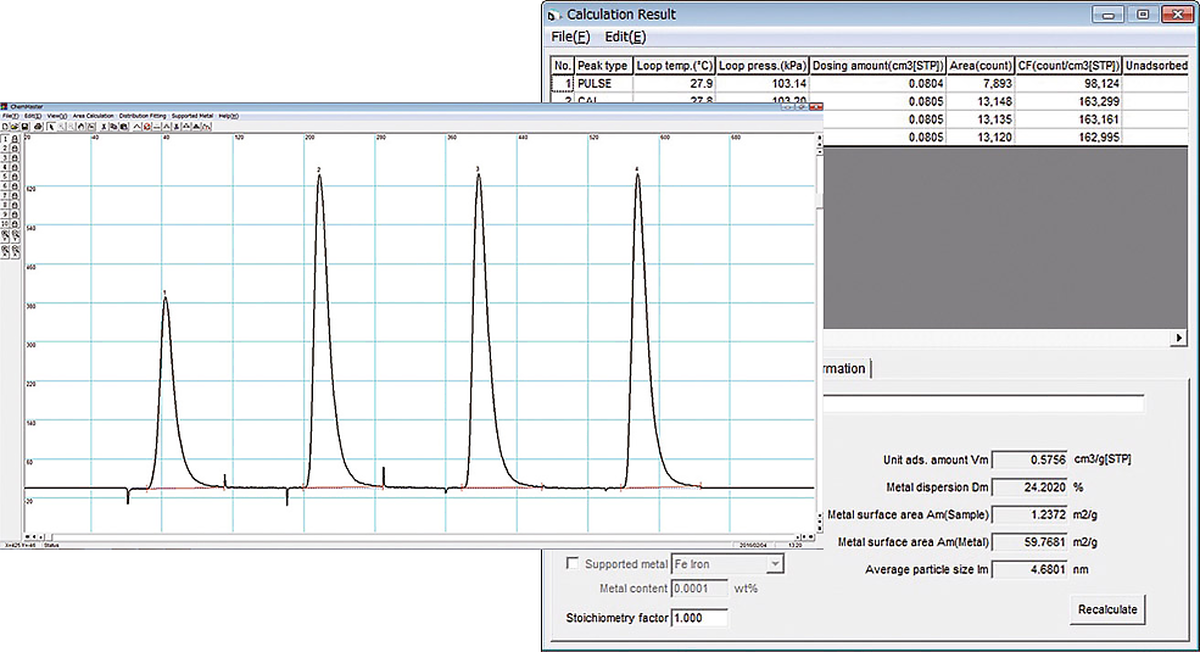
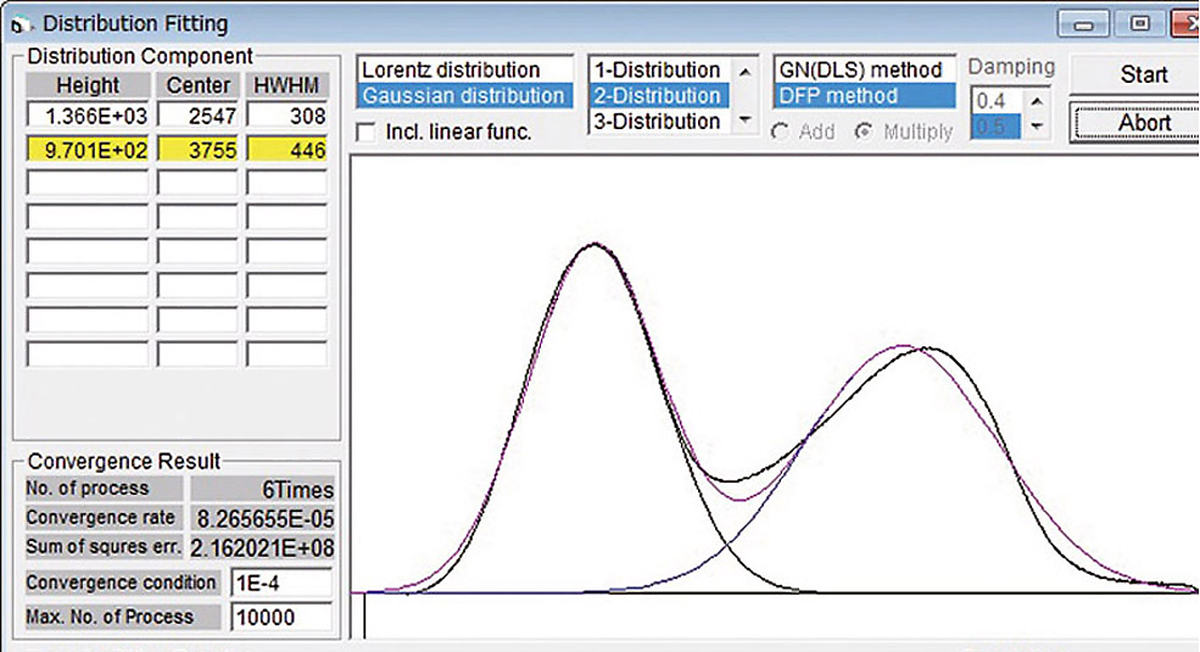
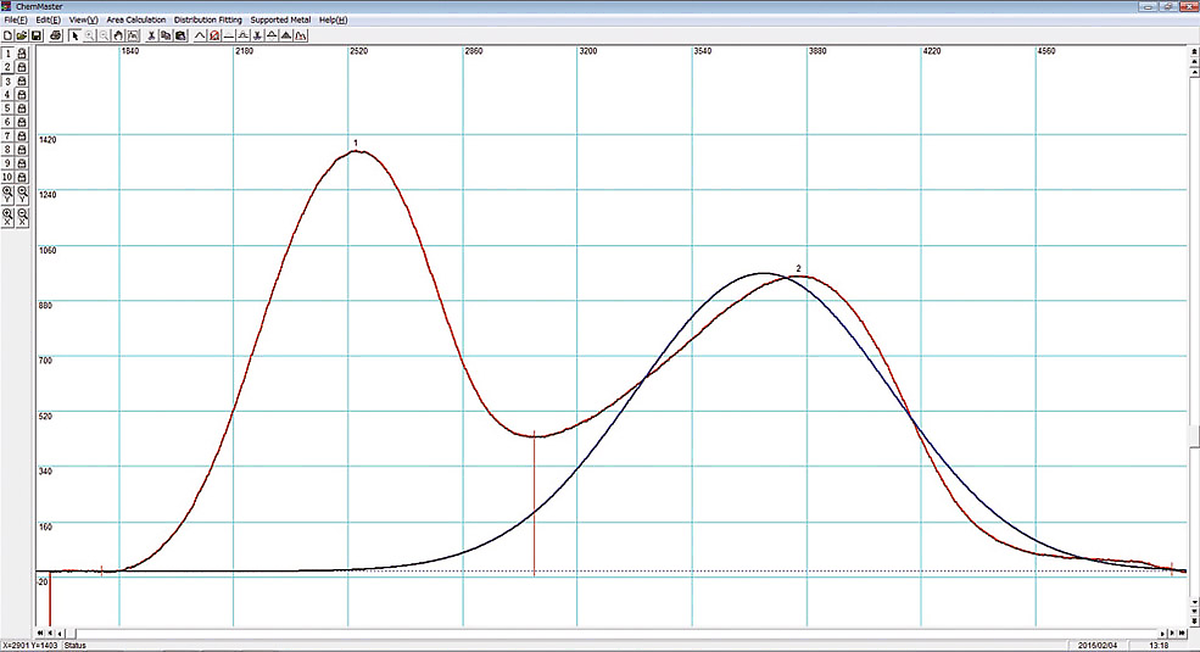
The obtained mass spectrum can be analyzed with Microtrac's ChemMaster II software. The key features of this user-friendly software are:
The chemisorption amount, metal dispersion rate and other properties can be calculated automatically.
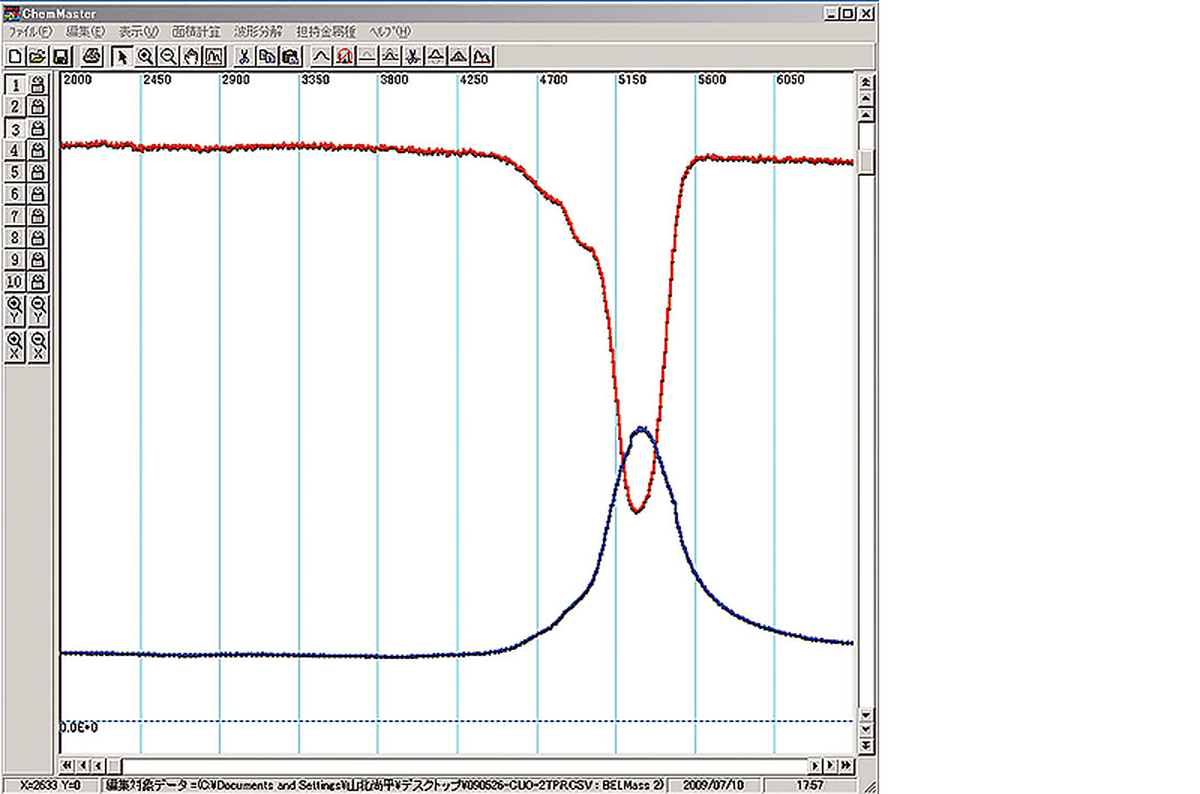
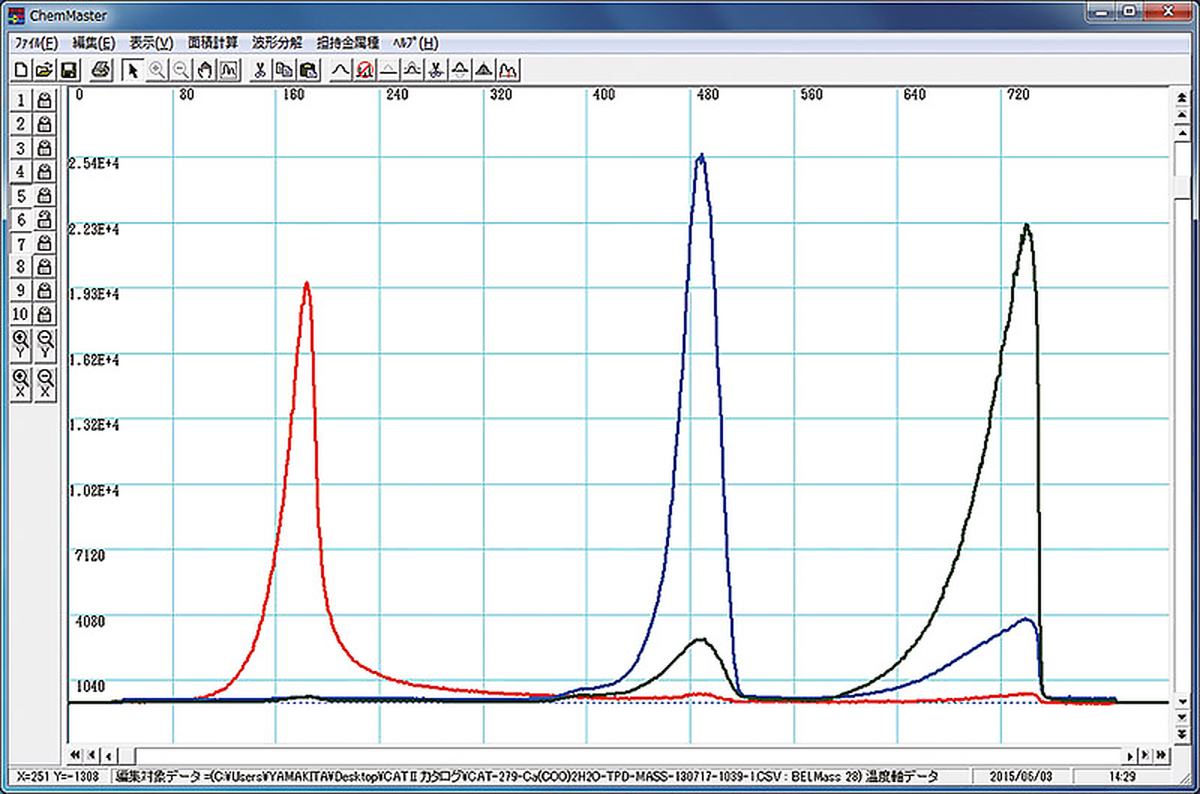
The combination of the BELMASS II mass spectrometer with the BELCAT II makes it possible to evaluate the catalytic reaction (TPReaction) in more detail. BELMASS ll can record the sample temperature and is suitable for thermal analysis.
Hydrogen consumption and water production can be observed at the same time.
By heating the sample, m/z=18,28,44 can be detected.
chemicals
battery materials
ceramics
To find the best solution for your particle characterization needs, visit our application database
| Maximum range | m/z = 1 ~ 200 |
| Filament material | Yttria-coated iridium |
| Detector | Faraday cup / SEM |
| Resolution | M/∆M≥2M |
| Sniffing section | Capillary tubes Standard-specification is made of SUS Option-specification is made of PEEK |
| Capillary tube dimensions | OD = 1/16 inch; ID = 0.1 mm; L = 1.5 m |
| Hot hose length | 1 m |
| Maximum heating temperature of hot hose | 200°C (SUS) 120°C (PEEK) |
| Gas introduction method | Differential exhaust |
| Amount of gas introduced | 0.6 cc / min (at 1 atm) |
| Gas inlet pressure | Atmospheric pressure |
| Exhaust port fitting | 1/4 inch one-touch joint |
| Communication Interface | RS-232C (straight) |
| Dimensions (W x H x D) | 280 × 400 × 600 mm (excluding capillary tube) |
| Analog signal input | DC0 to 10V (10 bit, 1 ch) |
| Weight | 36 kg |
| Power supply: Rated voltage | Single-phase: 100-120V (Indication 115V) AC: 200-240V (Indication 230V) |
| Power supply: Power frequency | 50 / 60 Hz |
| Power supply: Power consumption | 600 VA |
| Power supply: Electric shock protection class | Class I |
| Standard | CE, UKCA |
| Selected Ion Monitor | Max. 16 ch |
| Installation environment: Temperature | 10°C to 35°C |
| Installation environment: Humidity | 20%RH to 80%RH (no condensation) |
| Installation environment: Elevation | 2000 m or less |
| Installation environment: Installation category | Category II |
| Installation environment: Pollution degree | 2 (for indoor use) |
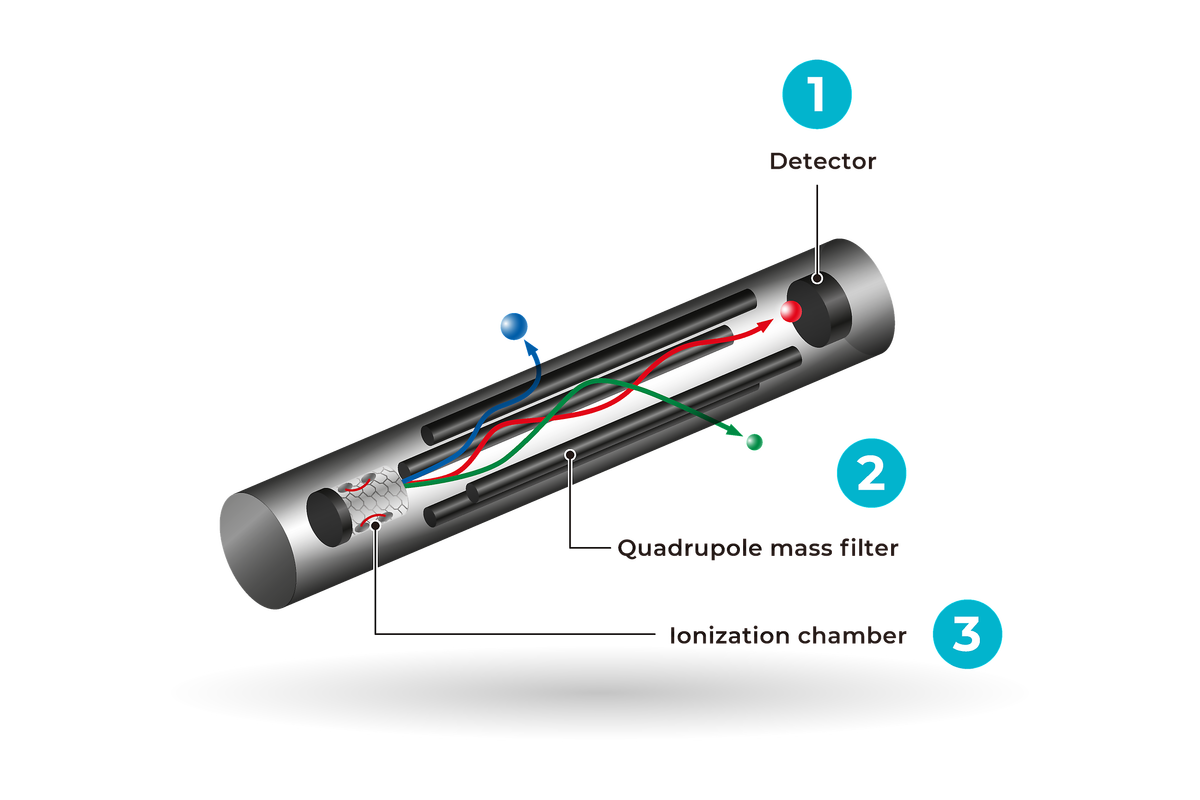
In the BELMASS II mass spectrometer gas molecules are ionized in the ionization chamber and migrate through the quadrupole mass filter to the detector. The mass filter consists of four parallel rods. A high frequency voltage with an offset DC voltage is applied between each opposing pair of rods.
The applied voltage affects the trajectory of the ions. Only ions with a certain m/z (mass-to-charge ratio) reach the detector at a certain voltage ratio. Other ions are ejected and collide with the rods. A mass spectrum is obtained by observing the ions passing through the quadrupole mass filter by varying the voltages across the rods.
Content may be subject to modifications or corrections