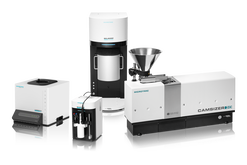






Análisis de Tamaño de Partícula y Estabilidad para Cosméticos y Cuidado del Hogar Hogar y cuidado personal
Cosméticos, protectores solares, champús, acondicionadores, detergentes y formulaciones domésticas combinan polvos, pigmentos, gotas, surfactantes, ingredientes activos y fragancias en sistemas cada vez más complejos. El tamaño de partícula y el comportamiento de dispersión pueden influir en la suavidad, la apariencia, la cobertura, el rendimiento de limpieza, la entrega del producto y la vida útil.
Microtrac proporciona tecnologías analíticas complementarias para el análisis de partículas cosméticas y el desarrollo de formulaciones de cuidado en casa. Al medir el tamaño, la forma, la carga superficial, el tamaño de las gotas, las propiedades superficiales y la estabilidad física de las partículas, los formuladores pueden comparar materias primas y condiciones de formulación con datos objetivos en lugar de depender únicamente de la inspección visual o de las pruebas del producto final.

Conectar las propiedades de las partículas con el rendimiento de la formulación
La caracterización de partículas ayuda a los equipos de desarrollo y calidad a conectar los cambios físicos dentro de una formulación con las propiedades que experimentan los consumidores. Los objetivos típicos incluyen:
- Mejorando la suavidad, la capacidad de extensión, la cobertura y la sensación sensorial
- Control de pigmentos, minerales, partículas exfoliantes y dispersiones de ingredientes activos
- Mejorar la vida útil: reducir la cremación, la sedimentación, la agregación y la separación de fases
- Comparando opciones de formulación: surfactantes, estabilizadores, fragancias y combinaciones de materias primas
- Mejorando la dispersión, disolución y consistencia del detergente
- Optimización del tamaño de las gotas de pulverización para desodorantes, fragancias, protectores solares y limpiadores domésticos
- Detectar la inestabilidad de la formulación antes y reducir el cribado innecesariamente prolongado
La medición más útil depende de si el desafío de la formulación proviene de una partícula seca, una dispersión coloidal fina, una emulsión, una suspensión concentrada o de la forma en que se administra un producto durante su uso.
Polvos cosméticos, pigmentos y exfoliantes: Controla el tamaño, la forma y la sensación
El análisis del tamaño de las partículas para cosméticos es particularmente importante para los polvos y sólidos suspendidos que afectan directamente la apariencia y las propiedades sensoriales. Los pigmentos, los ingredientes minerales, los gránulos de detergente, las perlas y cristales exfoliantes pueden comportarse de manera diferente dependiendo de su distribución de tamaño, forma y grado de aglomeración.
Las partículas finas o bien redondeadas pueden proporcionar una sensación más suave y una cobertura más uniforme, mientras que el material grueso, angular o aglomerado puede contribuir a la aspereza, defectos visibles o un procesamiento inconsistente. La morfología de las partículas también puede influir en el flujo del polvo, la mezcla y la distribución de los ingredientes funcionales a través de una formulación.
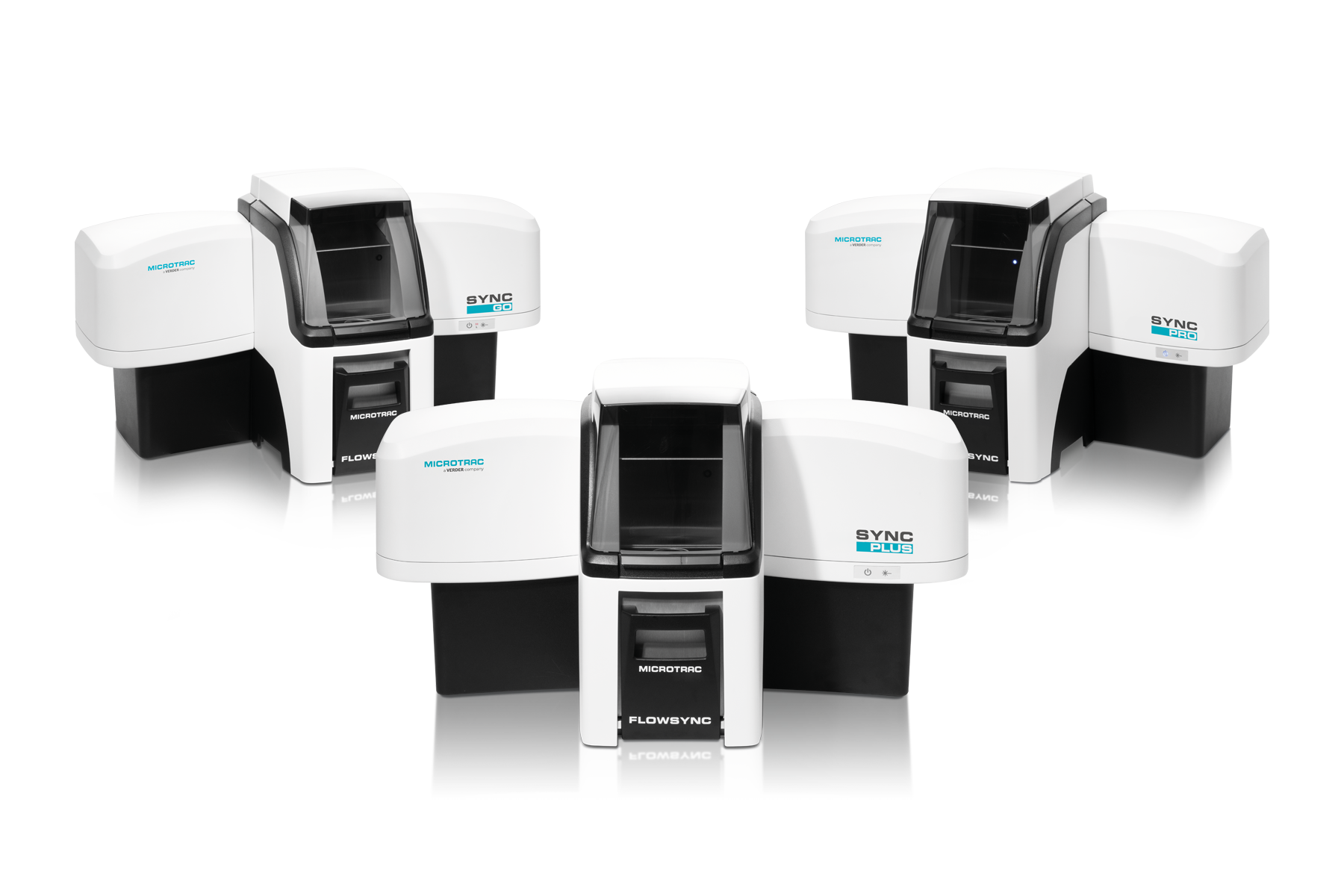
Combinar Tamaño de Partícula e Imágenes con Sync
MICROTRAC Sync combina difracción láser con análisis dinámico de imágenes, permitiendo a los formuladores medir el tamaño de partícula y obtener al mismo tiempo información visual y cuantitativa sobre la forma y la aglomeración. La plataforma puede manejar muestras húmedas y secas en un amplio rango de tamaños, lo que la hace útil para el control de materiales entrantes, el desarrollo de formulaciones y el control de calidad rutinario.
En aplicaciones de cuidado del hogar y personal, Sync puede soportar:
- Control del tamaño de partícula de pigmentos, minerales y polvos cosméticos
- Evaluación de gránulos de detergente y otros ingredientes secos para el cuidado del hogar
- Detección de partículas y aglomerados sobredimensionados
- Comparación de materiales húmedos y secos utilizando información de medición complementaria
- Investigación de diferencias entre lotes que afectan la textura, la apariencia o el procesamiento
Polvos cosméticos, pigmentos y exfoliantes: Controla el tamaño, la forma y la sensación
El análisis del tamaño de las partículas para cosméticos es particularmente importante para los polvos y sólidos suspendidos que afectan directamente la apariencia y las propiedades sensoriales. Los pigmentos, los ingredientes minerales, los gránulos de detergente, las perlas y cristales exfoliantes pueden comportarse de manera diferente dependiendo de su distribución de tamaño, forma y grado de aglomeración.
Las partículas finas o bien redondeadas pueden proporcionar una sensación más suave y una cobertura más uniforme, mientras que el material grueso, angular o aglomerado puede contribuir a la aspereza, defectos visibles o un procesamiento inconsistente. La morfología de las partículas también puede influir en el flujo del polvo, la mezcla y la distribución de los ingredientes funcionales a través de una formulación.
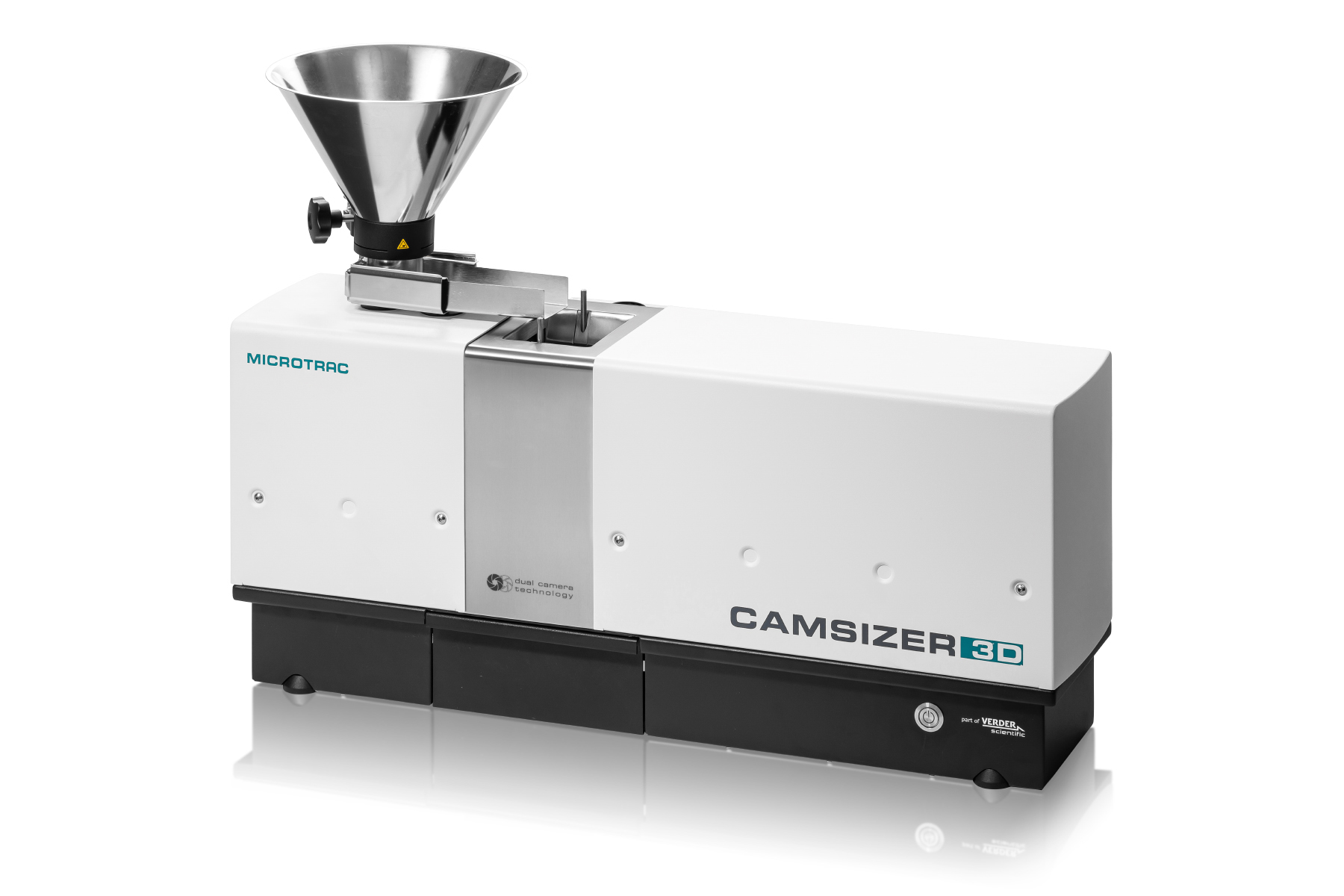
Cuantificar Forma y Aglomerados con CAMSIZER
Para gránulos, perlas, cristales y partículas cosméticas más grandes, los instrumentos MICROTRAC CAMSIZER utilizan análisis dinámico de imágenes para cuantificar parámetros de tamaño y forma como las DIMENSIONS de las partículas, la relación de aspecto y la redondez. Esto es valioso cuando la morfología en sí es parte de la especificación del producto o del objetivo sensorial.
Las mediciones CAMSIZER pueden ayudar a los fabricantes:
- Comparar partículas exfoliantes y materiales de exfoliación
- Monitorear la consistencia de gránulos, perlas y cristales
- Detectar partículas irregulares o aglomeradas que puedan crear una sensación arenosa o grumos visibles
- Optimización de molienda, clasificación y mezcla
- Mantener un control más estricto de lote a lote de polvos e ingredientes de maquillaje
Protectores solares, emulsiones finas y nanopartículas
Los sistemas de cuidado solar, cuidado de la piel y fragancias pueden contener pigmentos finos, partículas de protector solar, ingredientes de tamaño nanométrico o gotas de emulsión muy pequeñas. En estos materiales, pequeños cambios en el tamaño de las partículas o en el estado de agregación pueden alterar la calidad de la dispersión y la consistencia de la formulación.
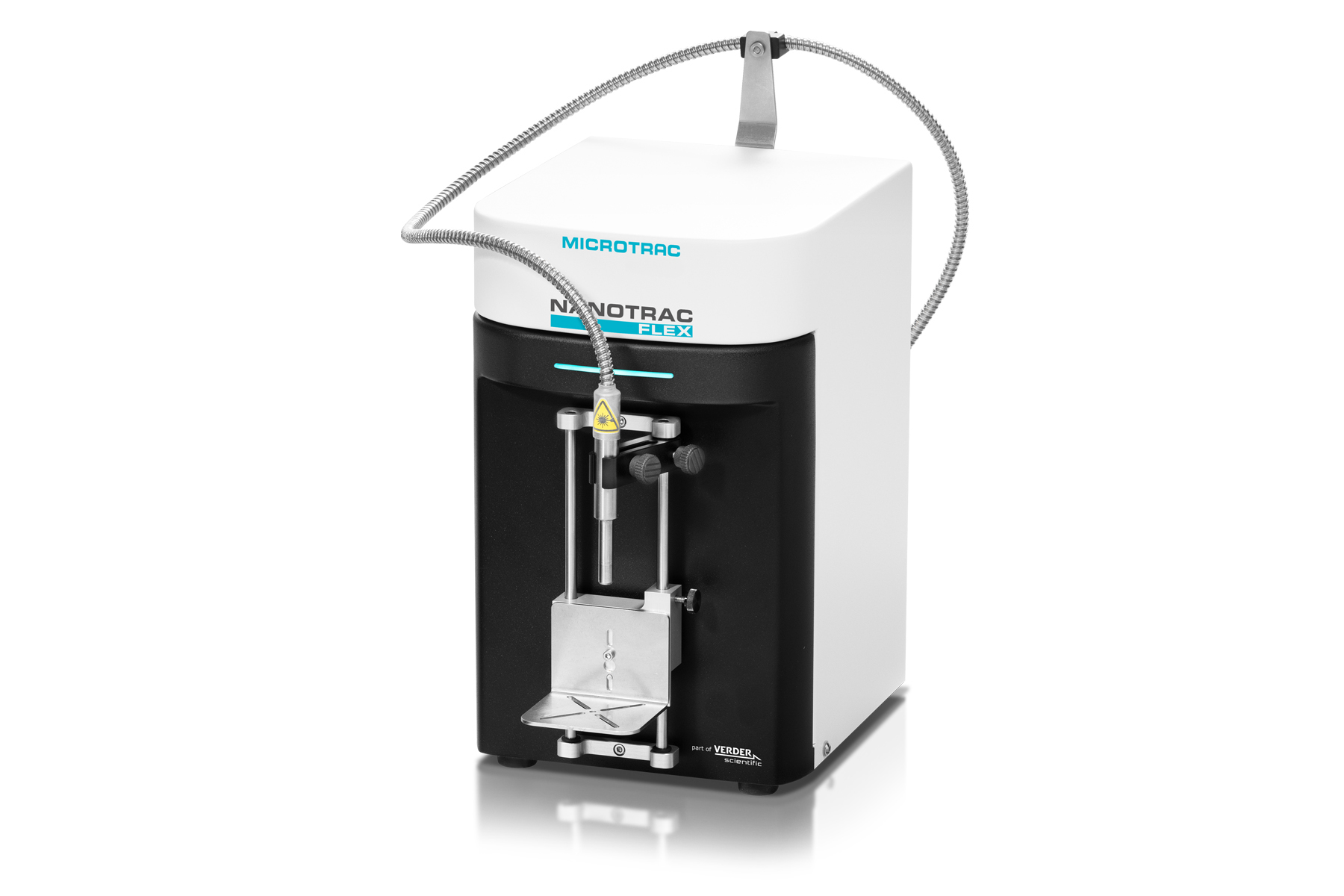
Mida Dispersiones Finas con Nanotrac Flex
MICROTRAC Nanotrac Flex utiliza dispersión de luz dinámica para el análisis de partículas submicrónicas y a nanoescala. Complementa las técnicas de tamaño de partícula más amplias cuando la formulación contiene coloides finos o nanopartículas que requieren mayor sensibilidad en el extremo pequeño del rango de tamaño.
Nanotrac Flex se puede utilizar para evaluar:
- Dispersiones de partículas de protector solar finas
- Pigmentos e ingredientes cosméticos a nanoescala
- Emulsiones de fragancias finas y otros sistemas coloidales
- Cambios en el tamaño de partícula asociados con la agregación
- Condiciones de formulación o procesamiento que afectan la dispersión de partículas finas
Utilizados junto con mediciones de carga superficial y estabilidad directa, los datos de tamaño de partícula dan a los formuladores una visión más completa de si una dispersión fina es físicamente adecuada para un mayor desarrollo.
Emulsiones, Cremas y Lociones: Comprender las Interacciones Coloidales
Las cremas, lociones, acondicionadores, maquillaje, protectores solares y detergentes líquidos pueden volverse inestables cuando cambian las interacciones de partículas o gotas. El nivel de surfactante, la concentración de electrolitos, el pH, la adición de fragancia y la variación de las materias primas pueden influir en si la fase dispersa permanece separada o comienza a agregarse, flocularse o sedimentar.
El Potencial Zeta en cosméticos proporciona información sobre las interacciones electrostáticas dentro de sistemas dispersos. Se puede utilizar para comparar condiciones de formulación, evaluar estrategias de estabilización e identificar condiciones en las que las partículas tienen más probabilidades de interactuar.
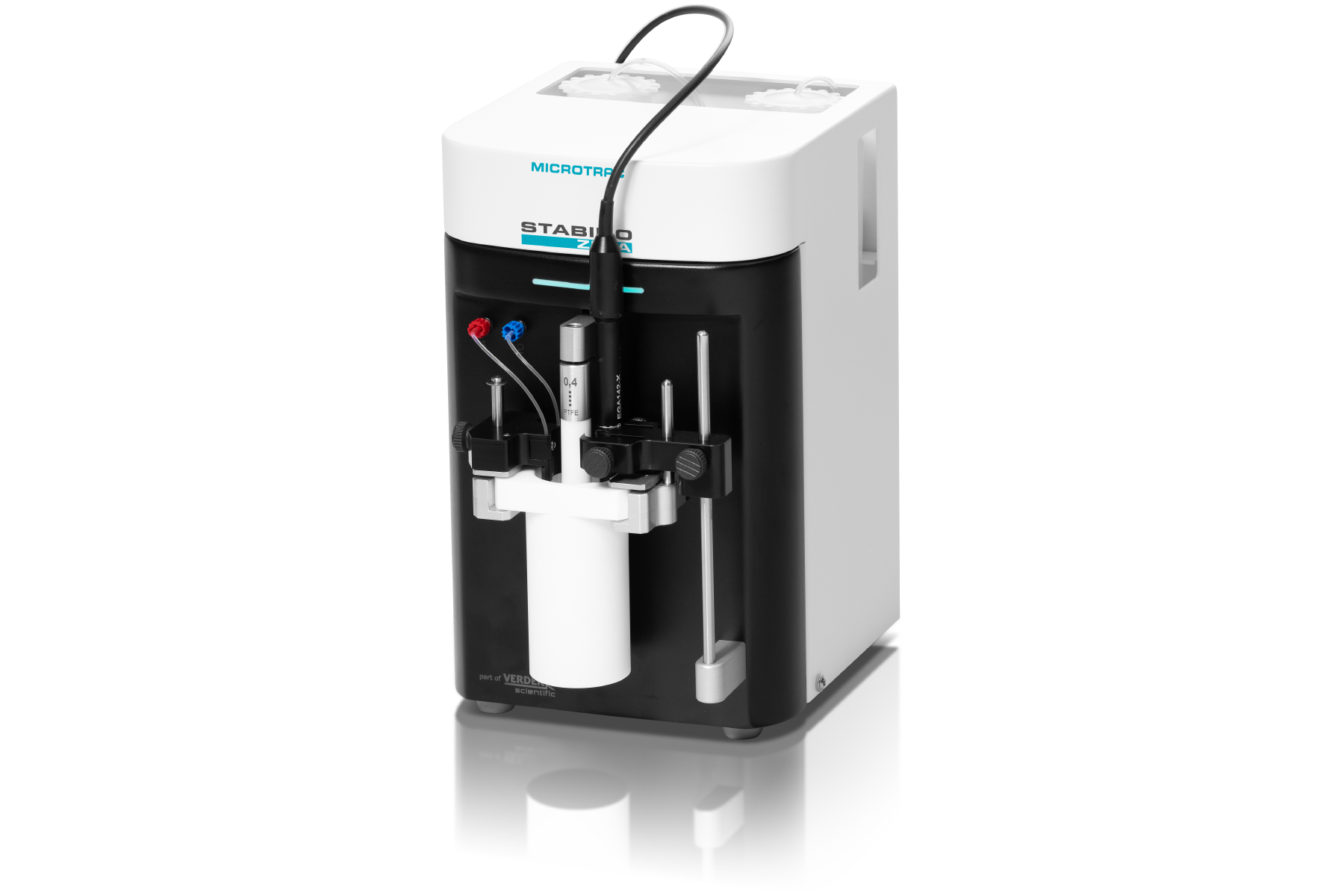
Formulación de Guía con STABINO ZETA
MICROTRAC STABINO ZETA utiliza tecnología de potencial de corriente para un análisis rápido del potencial zeta en dispersiones concentradas. Las mediciones se pueden realizar con poca o ninguna dilución en sistemas adecuados, ayudando a preservar las condiciones de formulación que los usuarios realmente desean estudiar.
Stabino Zeta puede ayudar a los equipos de formulación:
- Comparar surfactantes y condiciones de estabilización
- Investigar interacciones de partículas de protector solar
- Evaluar los cambios causados por ajustes de materias primas o formulación
- Estabilidad electrostática de la pantalla en emulsiones y suspensiones
- Combinar información de carga con datos de tamaño de partícula y estabilidad para una solución de problemas más rápida
Estabilidad de la formulación de cuidado personal y cribado de vida útil
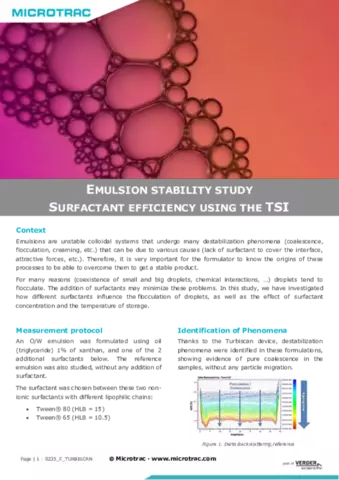
Una formulación puede cumplir sus objetivos iniciales de viscosidad, apariencia y tamaño de partícula, pero aún puede cambiar durante el almacenamiento. La cremosidad en lociones, la sedimentación en protectores solares, la turbidez en detergentes, la floculación en suspensiones y la separación de fases en acondicionadores pueden comprometer la calidad del producto antes de la fecha de caducidad prevista.
Los estudios de estabilidad tradicionales a menudo dependen en gran medida de la observación visual. Ese enfoque puede retrasar la retroalimentación porque pequeños cambios pueden comenzar mucho antes de que aparezca una capa, sedimento o zona de clarificación visible.
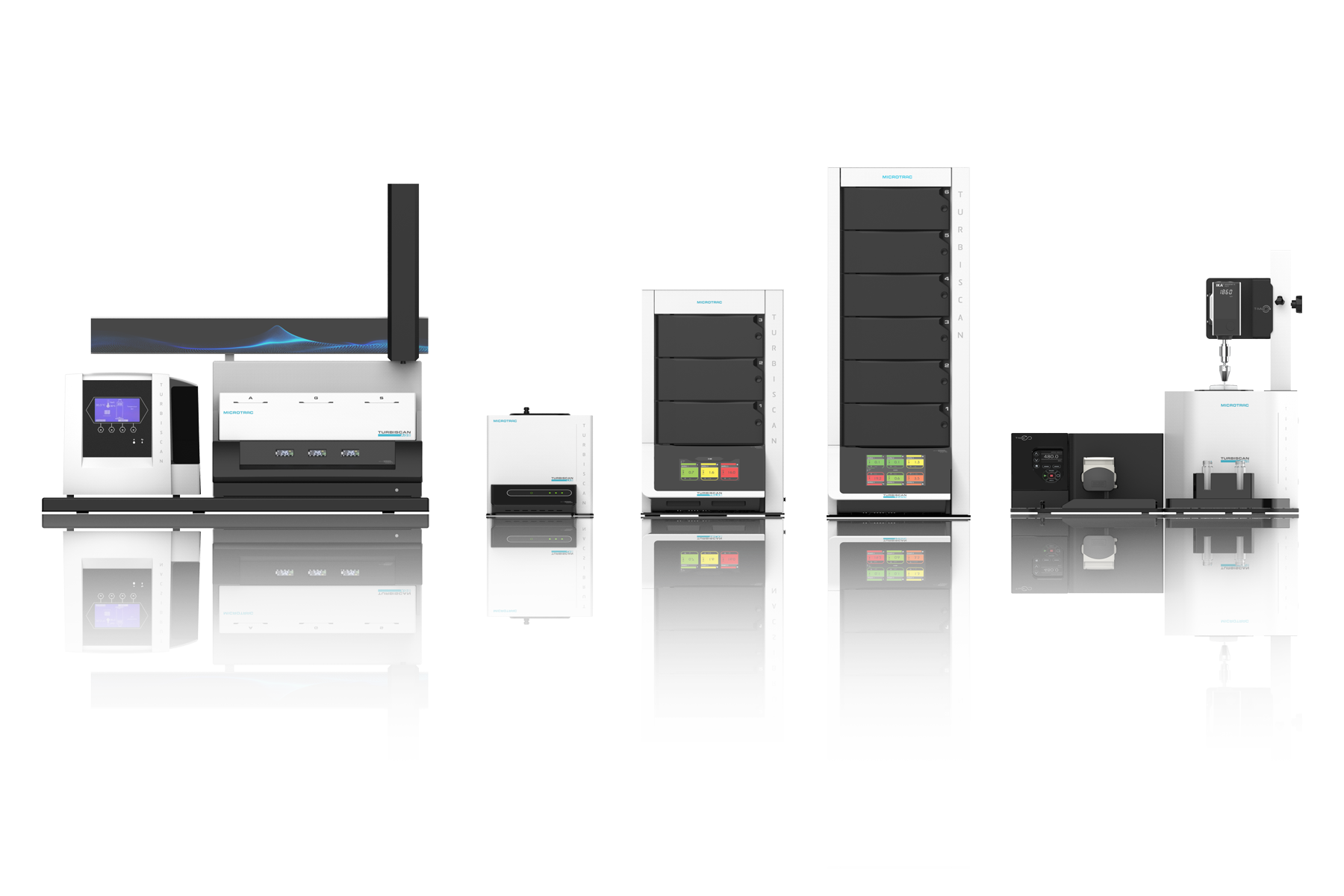
Detectar la desestabilización antes con TURBISCAN
MICROTRAC TURBISCAN utiliza dispersión de luz múltiple estática para monitorear cambios físicos en todo una muestra sin perturbarla. La técnica detecta cambios en la transmisión y dispersión hacia atrás de la luz asociados con la migración o la evolución del tamaño de las partículas, proporcionando información objetiva sobre la desestabilización antes de que sea obvia a simple vista.
TURBISCAN puede monitorear fenómenos que incluyen:
- Migración: Cremado y sedimentación, Clarificación y separación de fases
- Cambios de tamaño: Cambios relacionados con la floculación, agregación y coalescencia
- Diferencias de estabilidad entre condiciones de surfactante o estabilizador
- Cambios introducidos por fragancias u otros ingredientes de la formulación
- Comportamiento de la formulación de protector solar y detergente durante el cribado acelerado
Para los equipos de I+D y control de calidad, información de estabilidad más temprana y objetiva puede reducir el trabajo de formulación de prueba y error, apoyar una clasificación más rápida de las formulaciones candidatas e identificar qué productos merecen estudios de validación más largos.
Sprays y Aerosoles: Control de la Entrega de Productos
Los perfumes, desodorantes, aerosoles para el cabello, protectores solares en spray, brumas cosméticas, ambientadores y productos de limpieza del hogar dependen de la forma en que un líquido se atomiza durante su uso. La distribución del tamaño de las gotas puede influir en la cobertura, la deposición, la sensación al rociar, el consumo del producto y la consistencia de la dosis entregada.
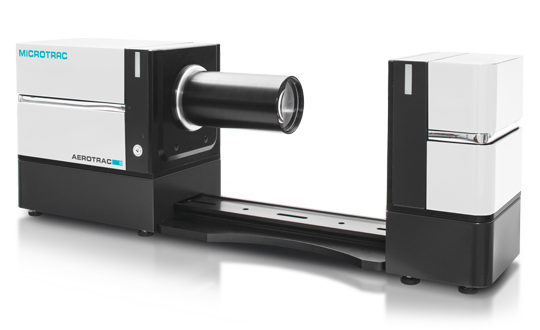
Optimizar el tamaño de las gotas de pulverización con AEROTRAC II
MICROTRAC Aerotrac II proporciona medición de gotas de pulverización en tiempo real utilizando tecnología de dispersión óptica de luz. Permite a los equipos de desarrollo comparar boquillas, condiciones de presión y cambios de formulación mientras se genera la pulverización.
Aerotrac II puede soportar:
- Comparación de sistemas de administración en aerosol y pulverización
- Optimización de las distribuciones de tamaño de gota para cobertura y deposición
- Evaluación de cambios en la formulación que alteran el comportamiento de atomización
- Evaluación de la boquilla y la configuración de presión
- Rendimiento de pulverización más consistente durante el desarrollo del producto y el envase
Ingredientes porosos, adsorbentes y portadores activos
Algunos ingredientes para el cuidado personal y del hogar se seleccionan no solo por su tamaño de partícula, sino también por sus propiedades superficiales. Los adsorbentes, los materiales exfoliantes, los polvos porosos y los portadores de ingredientes activos pueden depender del área superficial accesible y de la estructura de los poros para el comportamiento de captación, adsorción o liberación.
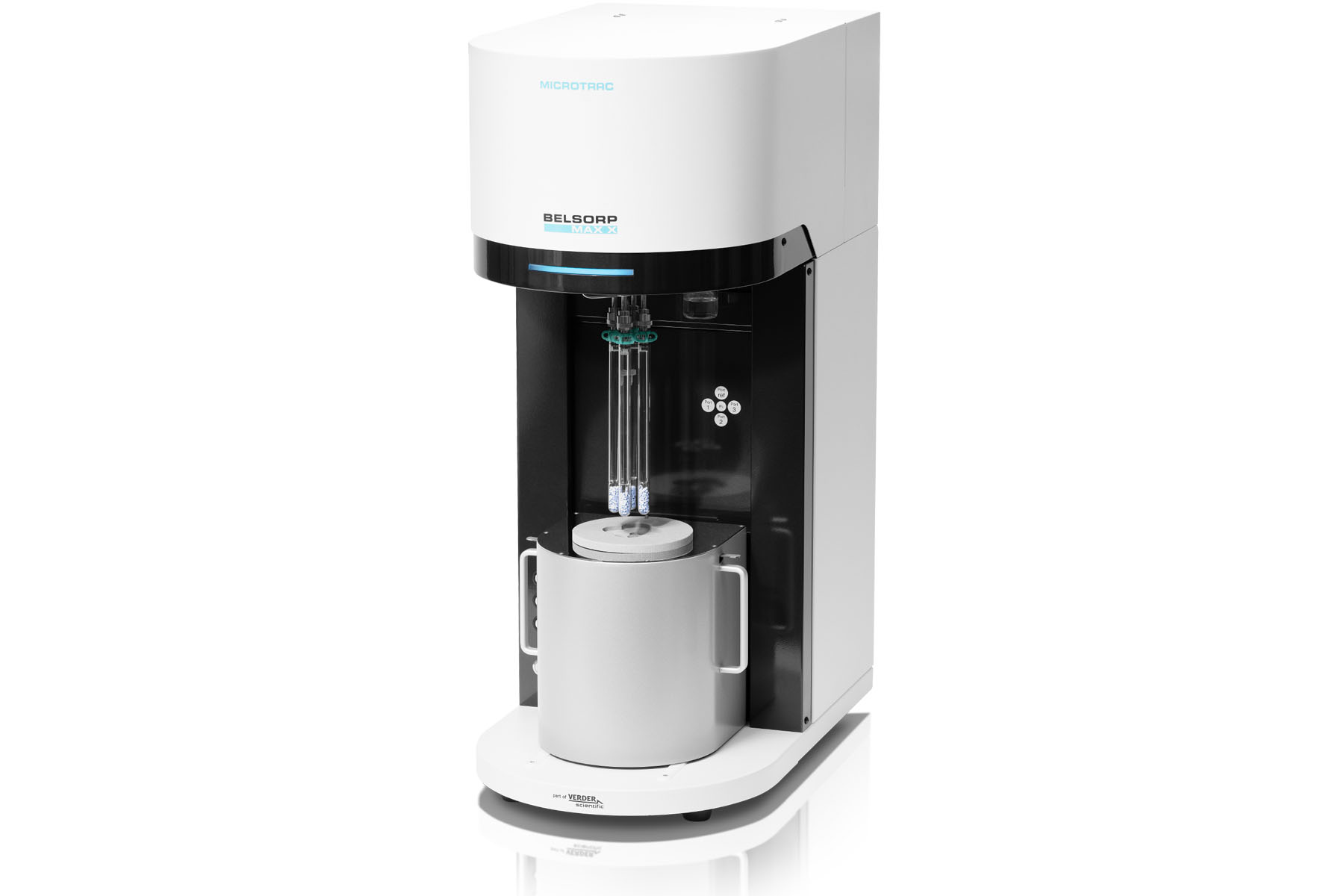
Caracterizar el área superficial y la porosidad con BELSORP
La serie MICROTRAC BELSORP utiliza la adsorción de gases para medir el área superficial específica y la estructura de poros. Estas mediciones añaden información que el tamaño de partícula por sí solo no puede proporcionar y pueden apoyar el desarrollo o la comparación de ingredientes porosos especiales.
BELSORP es particularmente relevante cuando los equipos necesitan:
- Compare la superficie de los adsorbentes o polvos especiales
- Caracterizar los materiales exfoliantes porosos
- Evaluar portadores diseñados para funciones de adsorción o liberación
- Investigar diferencias de material que puedan afectar el rendimiento de los ingredientes
Construir un flujo de trabajo de análisis cosmético y de cuidado del hogar adecuado para el propósito
Diferentes preguntas de formulación requieren diferentes mediciones. Un flujo de trabajo práctico puede combinar varias técnicas complementarias:
Para polvos cosméticos, pigmentos, gránulos de detergente y amplias distribuciones de tamaño de partícula, con información adicional de forma e imagen.
Para análisis detallado de tamaño y forma de gránulos, perlas, cristales, abrasivos y otras partículas más grandes.
Para emulsiones finas, partículas de protector solar y dispersiones a nanoescala.
Para estudios de carga superficial, cribado y optimización de la estabilización coloidal.
Para comparación de cremado, sedimentación, clarificación, agregación y formulación acelerada.
Para la caracterización en tiempo real de sistemas de entrega de aerosoles y pulverizaciones.
Para polvos porosos, adsorbentes y portadores funcionales donde las propiedades de la superficie son importantes.
La combinación de estas técnicas da a los formuladores una comprensión más clara de cómo las propiedades de la materia prima, las condiciones de dispersión y los parámetros de aplicación influyen en el rendimiento final del recubrimiento.

Aplicaciones clave en cuidado del hogar y personal
- Análisis del tamaño de las partículas de polvo cosmético, pigmento y mineral
- Control de la morfología de escamas, perlas, cristales y gránulos
- Análisis de estabilidad de protectores solares y caracterización de nanopartículas
- Estudios de estabilidad de cremas, lociones, acondicionadores y maquillaje
- Pruebas de formulación de detergentes y control de calidad de materias primas
- Cribado de compatibilidad de fragancias y surfactantes
- Análisis del potencial zeta para emulsiones y suspensiones
- Cribado de vida útil acelerada y estabilidad de la formulación
- Optimización de gotas en aerosoles para productos de cuidado personal y del hogar
- Análisis de área superficial y porosidad de adsorbentes y portadores activos
Notas de aplicación y recursos técnicos
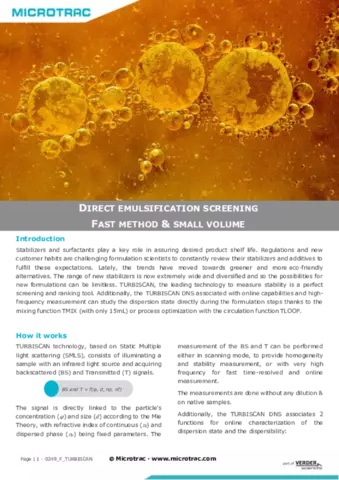
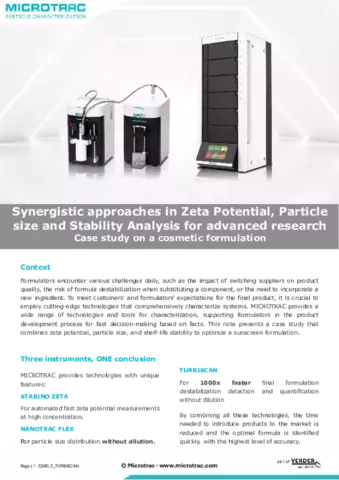
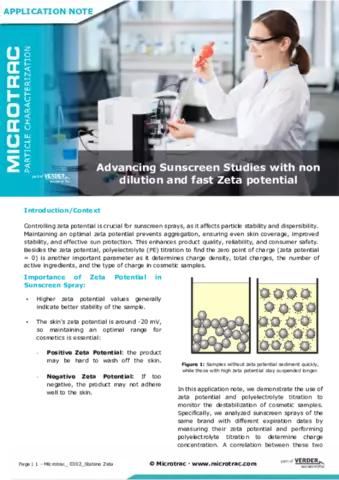
Explorar ejemplos prácticos centrados en el rendimiento del detergente, el desarrollo de emulsiones, la estabilidad del protector solar y los flujos de trabajo combinados de tamaño de partícula, carga y estabilidad.




Mejorar las decisiones de formulación antes de las pruebas a largo plazo
Las mediciones del tamaño de partícula, la morfología, la carga superficial y la estabilidad directa revelan diferentes partes del mismo problema de formulación. Al seleccionar mediciones en torno a la forma física del producto y el atributo de rendimiento que debe controlarse, los equipos de desarrollo pueden identificar condiciones de formulación prometedoras antes y investigar fallos con evidencia más objetiva.
Comparte tu muestra y objetivo de formulación de cosméticos, cuidado personal o cuidado del hogar con un especialista de Microtrac para identificar el enfoque de caracterización más apropiado.