






There are BJH, CI, and DH method (for cylindrical pore shape) and Innes method (for slit pore shape) as the mesopore analysis. All these theories are based on the calculation of capillary condensation theory (Kelvin equation). Generally, this theory is applied to the pores above 2 nm.

Condensation in the pore
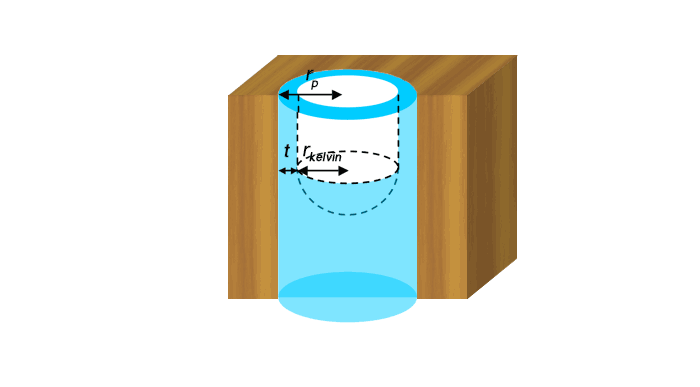
The pore shape model needs to be taken into the account, which is the same for micropore analysis. BJH, CI, and DH method will obtain mostly the same result. The only difference of these theories is the correction term of adsorption layer thickness ft(P / P0). This difference becomes prominent below 2 nm (non-applicable range). These theories are also applicable to macropores, but there is an upper limitation due to the measurement capability. As described, the pore size is calculated from Kelvin equation. In case of the pore size over 100 nm, it is difficult to measure the relative pressure of around P/P0=0.99 with good accuracy. The bigger the pore size, the more difficult it becomes to achieve the enough accuracy of the measurement.
Table: Relationship between the relative pressure and pore size

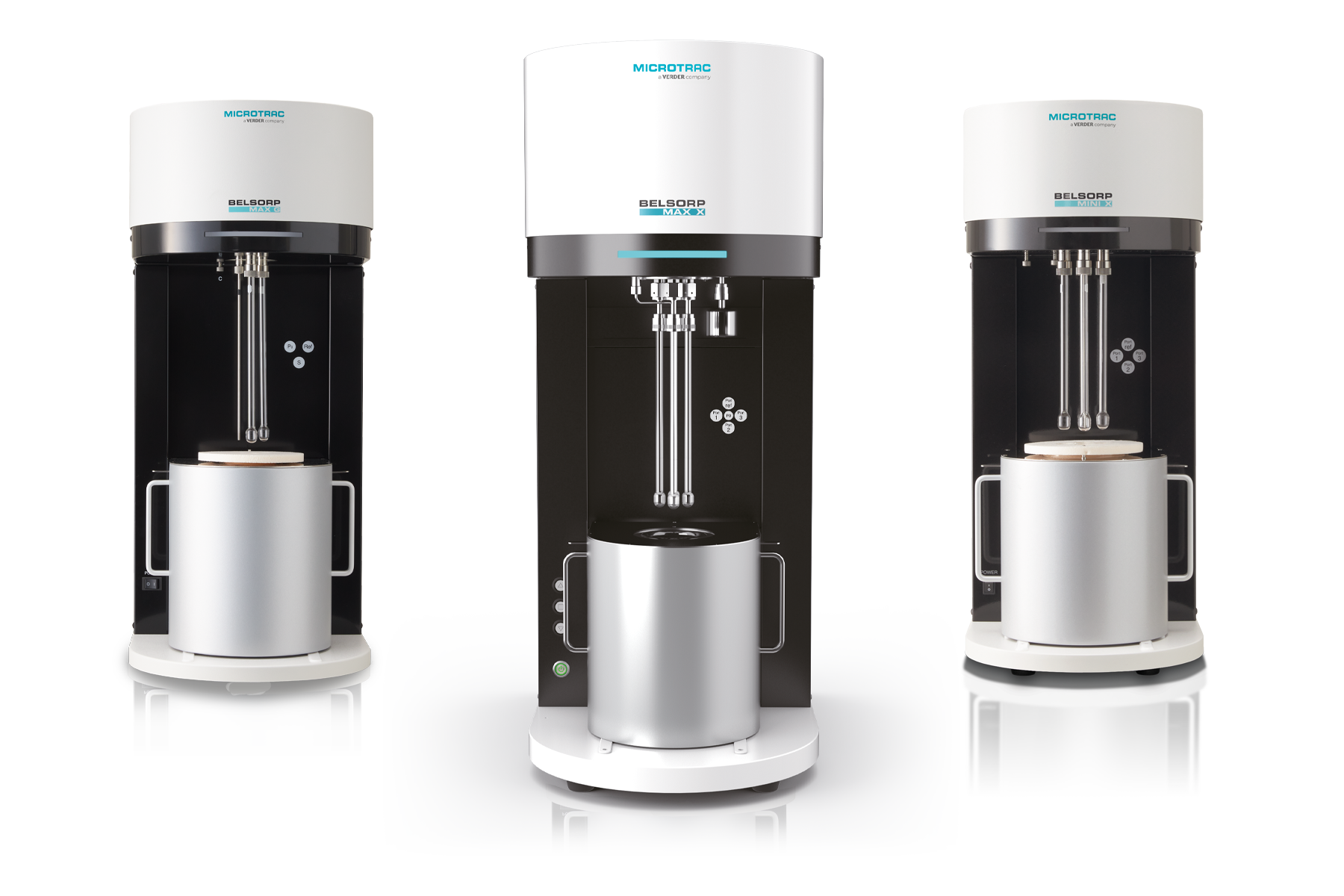
Microtrac offers a wide range of instruments for Gas Adsorption Measurement.




If you are interested in a quote or require further information, please contact us.
Discover the many different application areas in which Microtrac's analyzers are used.
More about MICROTRAC'S technology and tried-and-true measurement methods.
Take a look at our application laboratory and measurement service.