




Particle Size and Stability Analysis For Coatings, Paints & Inks
Color strength, opacity, gloss, flow behavior, surface finish, and shelf life all depend on how particles behave within a paint, ink, or coating formulation. Pigments, fillers, binders, and functional additives must be characterized to prevent agglomeration, settling, inconsistent application, and visible defects in the final film.
MICROTRAC provides particle characterization technologies for dry powders, concentrated dispersions, nanoscale ingredients, coating sprays, and finished formulations. By measuring particle size, shape, surface properties, charge, and physical stability, formulators and quality-control teams can identify the material causes of performance variation and make better-informed formulation and process decisions.
From raw-material qualification and milling optimization to stability testing and final-product quality control, particle size analysis for paints and coatings helps manufacturers improve consistency, shorten development cycles, and achieve more reliable product performance.

How Do Particle Properties Affect Coating Performance?
Particle properties connect raw materials with the appearance and processing of paints, inks, and coatings. Size, shape, surface area, surface charge, and dispersion stability influence color, opacity, gloss, flow, and shelf life. Measuring the property that explains a quality problem helps formulators adjust pigments, fillers, dispersants, and processing conditions with confidence.
- Controlling color strength, hiding power, opacity, and gloss
- Detecting agglomerates and evaluating pigment dispersion efficiency
- Optimizing milling, blending, and formulation conditions
- Comparing dispersants, surfactants, and stabilizer concentrations
- Improving flow, leveling, and film uniformity
- Preventing settling, flocculation, and phase separation
- Controlling powder-coating fluidization and deposition
- Optimizing droplet size in spray and inkjet applications
MICROTRAC instruments provide complementary measurements for these challenges, so the analytical approach can match the material, the formulation, and the application process.
How Does Pigment Particle Size Affect Color and Appearance?
Pigment particle size influences how light interacts with a coating, including color strength, opacity, hiding power, gloss, and surface appearance. Oversized particles and agglomerates cause defects and batch-to-batch variation, so pigment and filler sizes are checked during raw-material inspection, milling, and routine quality control.
How Does MICROTRAC's SYNC Series Measur Pigment Size and Shape?
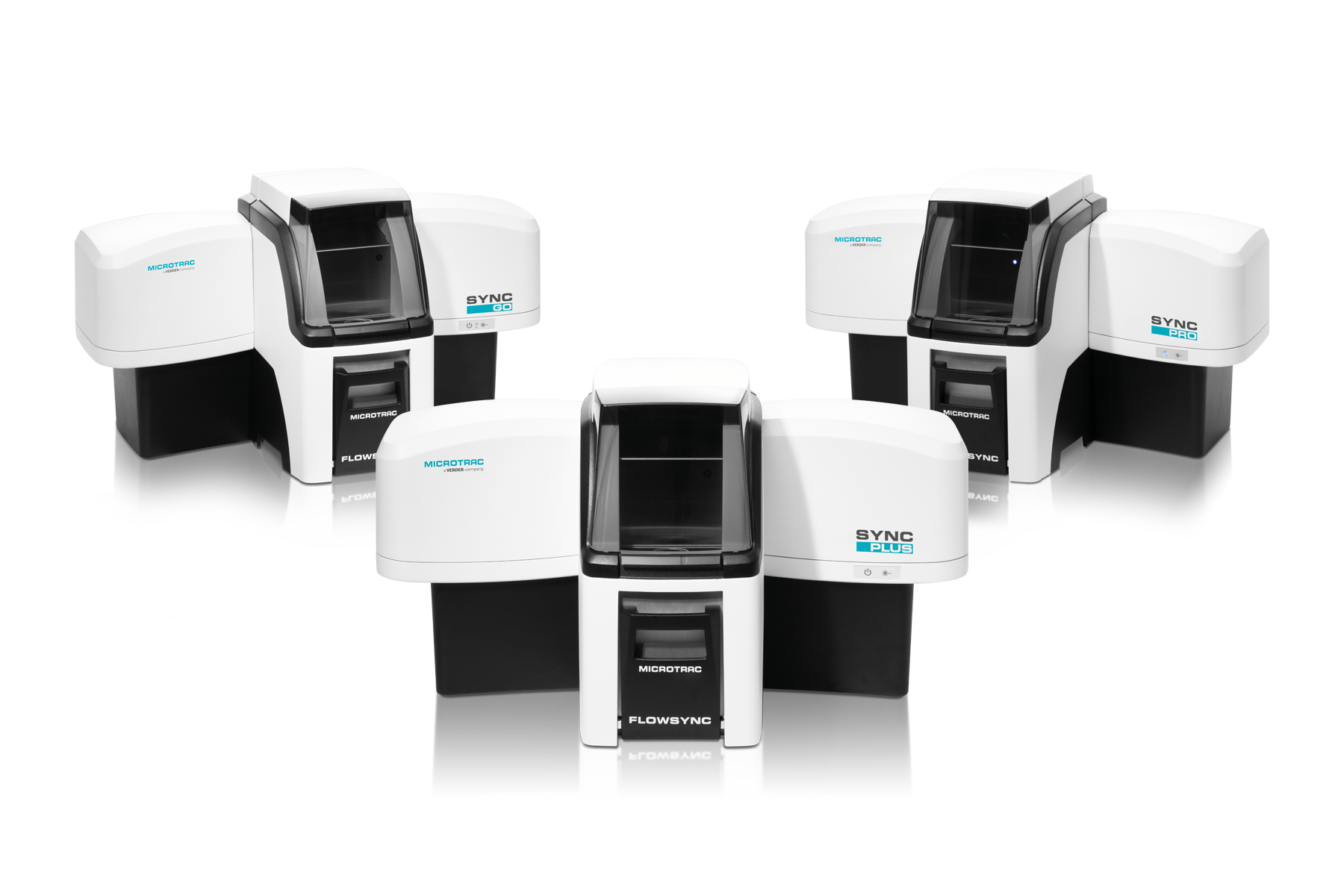
MICROTRAC's SYNC analyzers measure particle size distributions by laser diffraction and, with the optional camera, add dynamic image analysis in the same measurement. Particle images show agglomerates and shape differences that a size distribution alone can hide, for powders and dispersions.
- Monitor pigment and filler particle size distributions
- Detect oversized particles and agglomerates
- Evaluate changes during milling or dispersion
The SYNC series suits size control of compatible pigments, fillers, and coating powders. Dynamic light scattering adds hydrodynamic sizing of suitable fine dispersions.
Why Does Particle Size Matter for Nano-Additives and Inks?
Advanced coatings and inks contain fine pigments, functional nano-additives, and colloidal ingredients. These materials influence optical performance, conductivity in conductive inks, barrier properties, and durability only while their particle size stays controlled, so dynamic light scattering extends size analysis into the nanometer range.
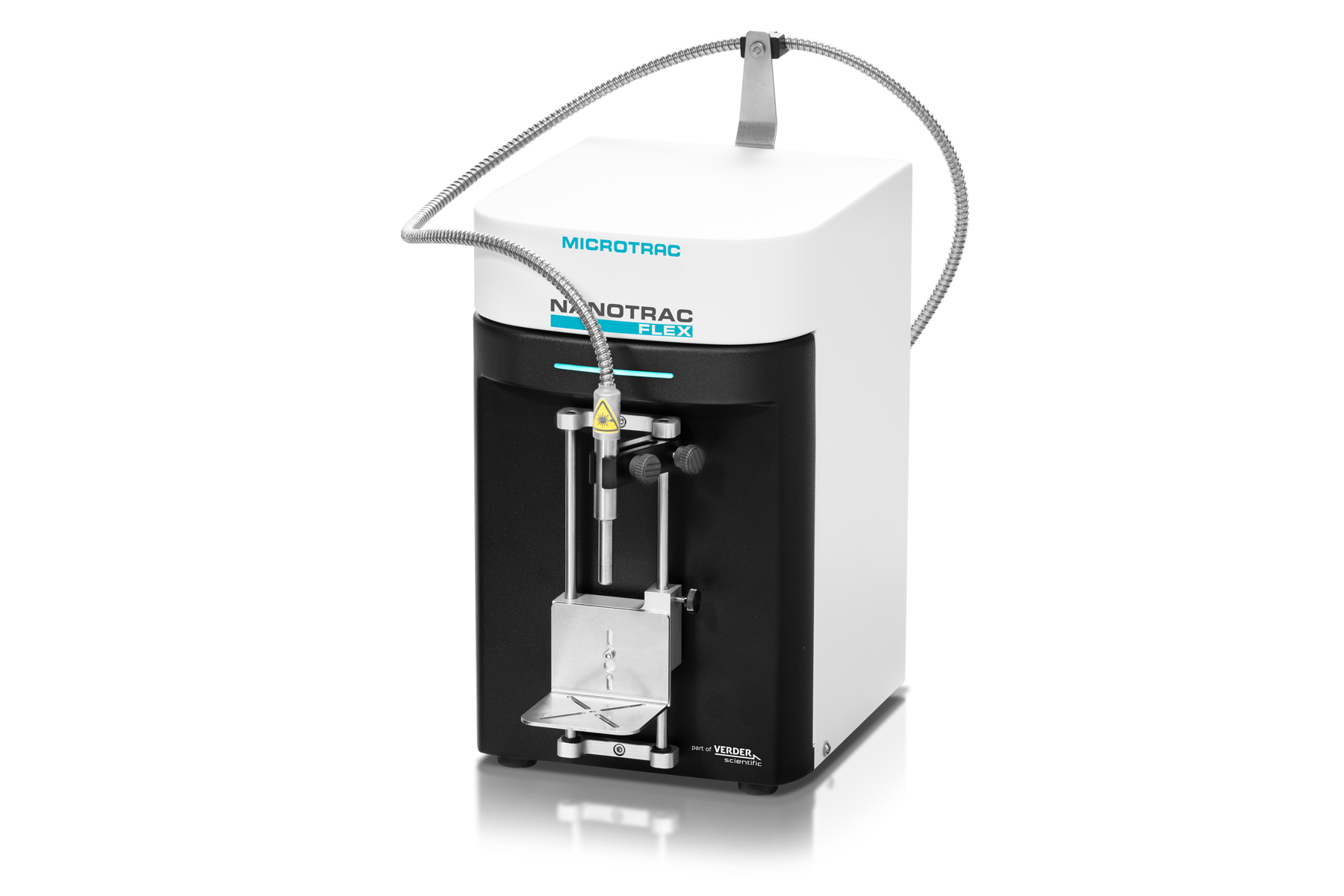
How Does MICROTRAC's NANOTRAC FLEX Analyze Nanoscale Ingredients?
The NANOTRAC FLEX by MICROTRAC uses dynamic light scattering to measure hydrodynamic particle size in inks and fine pigment dispersions. The specified range is 0.3 nm to 10 µm. Direct probe measurements and undiluted operation depend on sample compatibility.
- Size nano-additives and fine pigments
- Check ink and inkjet formulations
- Detect size changes caused by aggregation
The NANOTRAC FLEX suits nanoscale and submicron dispersions such as inks; dry powders, broad micrometer distributions, and shape questions need laser diffraction or image analysis.
Why Do Particle Size and Shape Matter for Powder Coatings and Pigments?
The full size distribution and the particle shape influence fluidization, charging, packing, surface coverage, and the appearance of powder coatings. Too many fines create handling and recovery problems, oversized particles cause uneven deposition, and flake or needle shapes change viscosity and orientation in the film.
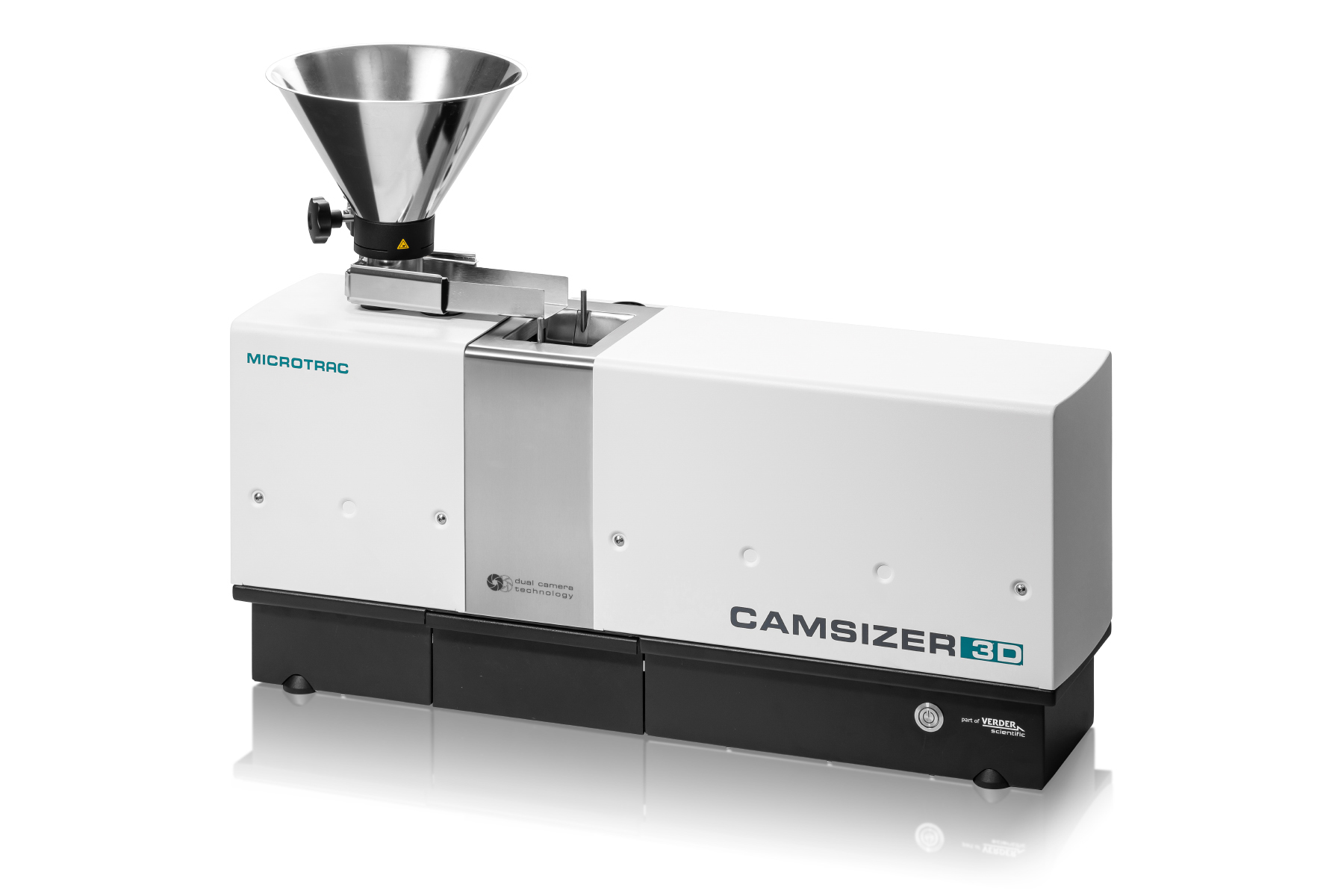
How Does MICROTRAC's CAMSIZER Series Characterize Powder Size and Shape?
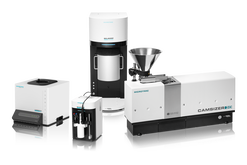
MICROTRAC's CAMSIZER X2+ and CAMSIZER 3D use dynamic image analysis to measure size and shape, such as aspect ratio and roundness, from individual particle images. Thousands of particles are recorded per second, so small oversized or irregular fractions are detected.
- Control powder coating size distributions
- Detect oversize particles and agglomerates
- Optimize milling, classification, and blending
The CAMSIZER series suits size and shape data for powders, granules, and coarser pigments; nanoscale ingredients and internal porosity need dynamic light scattering or gas adsorption.
How Does Zeta Potential Help Optimize Ink and Paint Dispersions?
A formulation can have the correct particle size after milling and still flocculate during storage if repulsion between particles is too weak. Zeta potential indicates the electrostatic stabilization and helps compare dispersants, surfactants, pH adjustments, and other formulation changes before problems appear in storage.
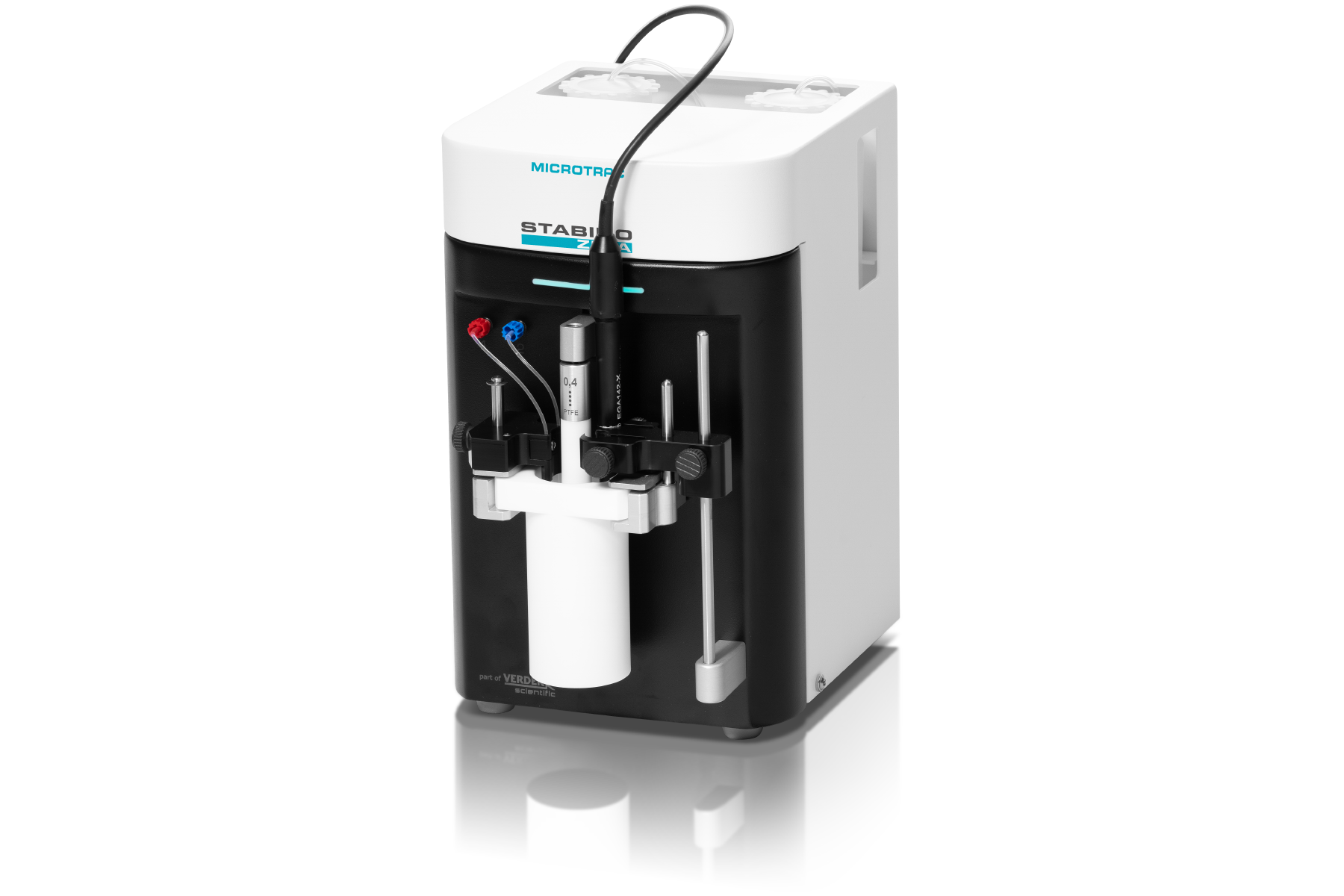
How Does MICROTRAC's STABINO ZETA Support Dispersant Optimization?
MICROTRAC's STABINO ZETA measures zeta potential using streaming potential technology. Built-in pH, polyelectrolyte, and salt titrations track electrostatic interactions as formulation conditions change. Measurements at concentrations up to 40 vol% depend on the sample.
- Compare dispersants and surfactants
- Optimize stabilizer dosage by titration
- Troubleshoot aggregation and flocculation
The STABINO ZETA suits liquid dispersions in which charge trends guide dispersant selection; sterically stabilized systems can be stable at low zeta potential, so confirm with stability measurements.
How Can Coating Dispersion Stability and Shelf Life Be Evaluated Faster?
{{LL::industries.coatings.stability.txt}}
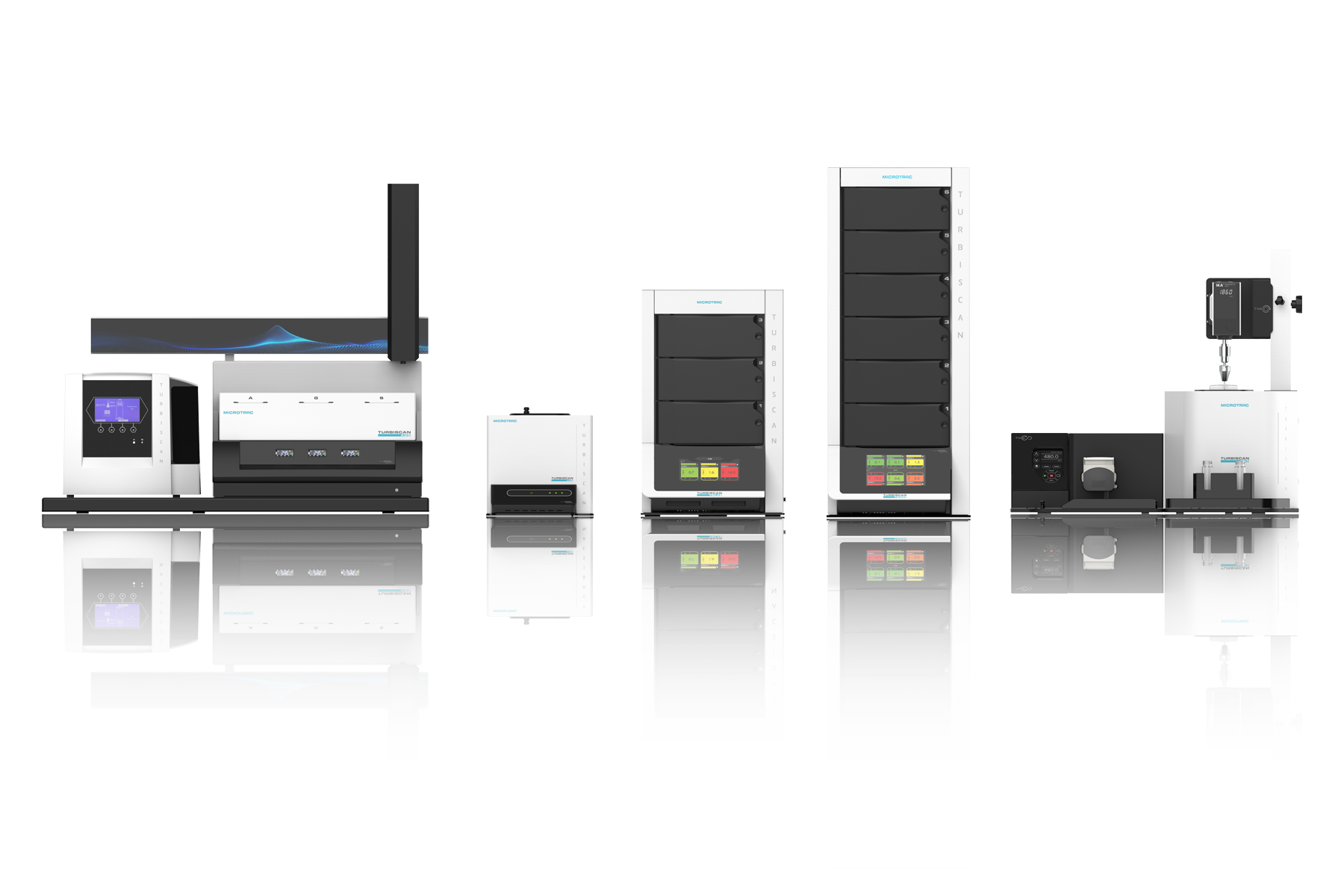
How Does MICROTRAC's TURBISCAN Series Detect Instability Earlier?
MICROTRAC's TURBISCAN analyzers monitor transmission and backscattering along the sample height using static multiple light scattering. Optical changes reveal physical destabilization, often without dilution. The Turbiscan Stability Index supports comparisons over consistent observation periods and test conditions.
- Detect sedimentation, creaming, and clarification
- Evaluate packing and redispersibility
- Compare stabilizers and dispersants objectively
The TURBISCAN series suits physical stability comparisons of liquid paints, inks, and dispersions; chemical aging and film properties need application tests on the finished coating.
Why Measure the Surface Area of Pigments and Fillers?
Surface area and pore structure influence how powders interact with binders, solvents, and other formulation components. They affect liquid demand, adsorption, drying, and coverage, especially for porous fillers and functional pigments, and explain why raw materials with similar particle sizes behave differently in a formulation.
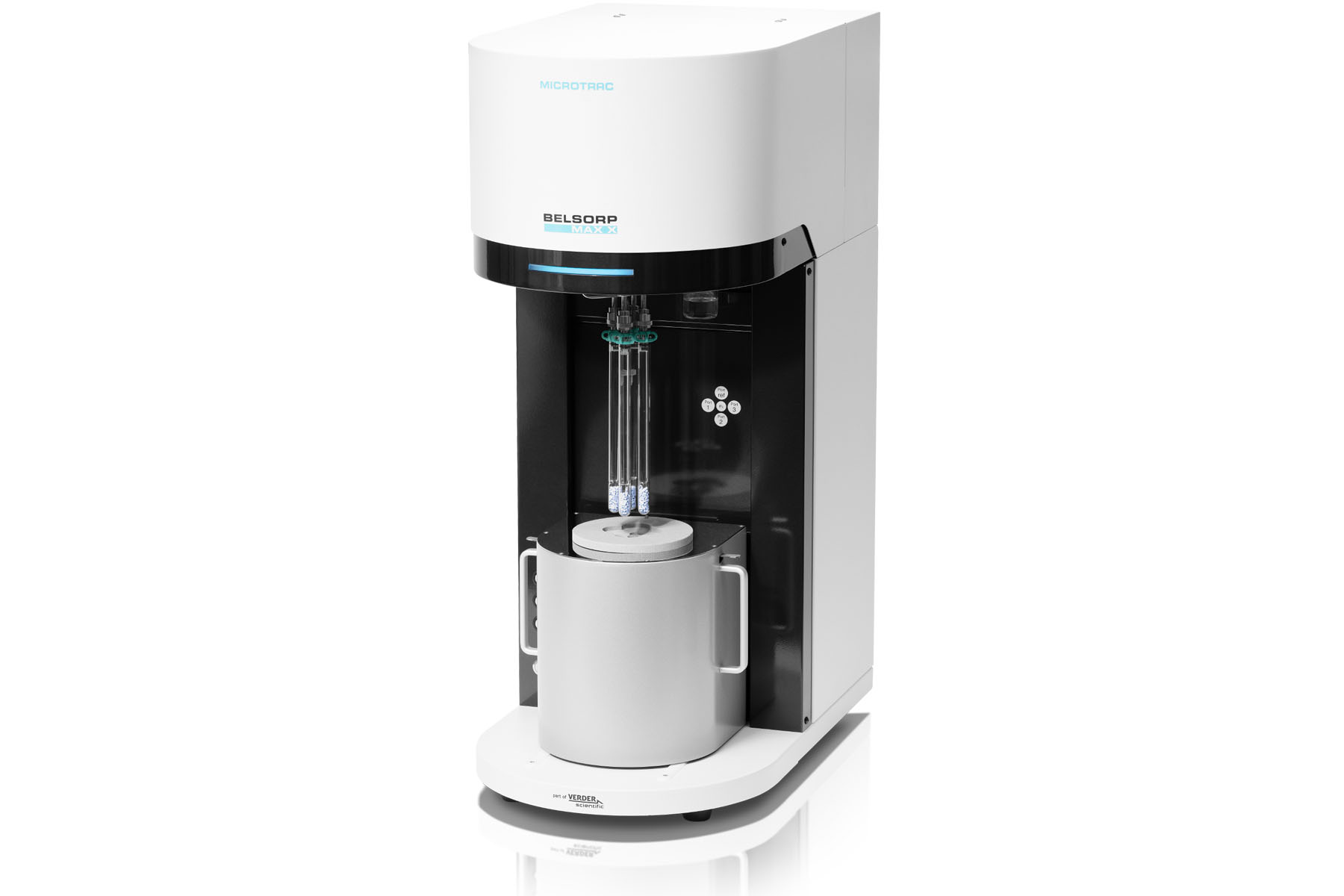
How Does MICROTRAC's BELSORP Evaluate Surface Properties?
MICROTRAC's BELSORP analyzers measure gas adsorption isotherms of pigments and fillers. BET evaluation provides specific surface area; appropriate pore models provide pore-size and pore-volume information. Select the instrument, adsorptive gas, and pretreatment for the material.
- Compare pigment and filler surface area
- Evaluate adsorption capacity and liquid demand
- Identify raw-material differences between lots
The BELSORP series suits dry pigments, fillers, and porous ingredients after suitable degassing; particle size and dispersion behavior in the liquid need other methods.
Why Do Larger Pores Matter in Coating Layers and Fillers?
Porous coating layers, molded bodies, and filler agglomerates can contain larger accessible pores. Mercury intrusion adds pore-entry and intruded-volume information to gas adsorption, supporting comparisons between samples and batches. The selected pressure configuration, mercury compatibility, and possible deformation determine how the results should be interpreted.
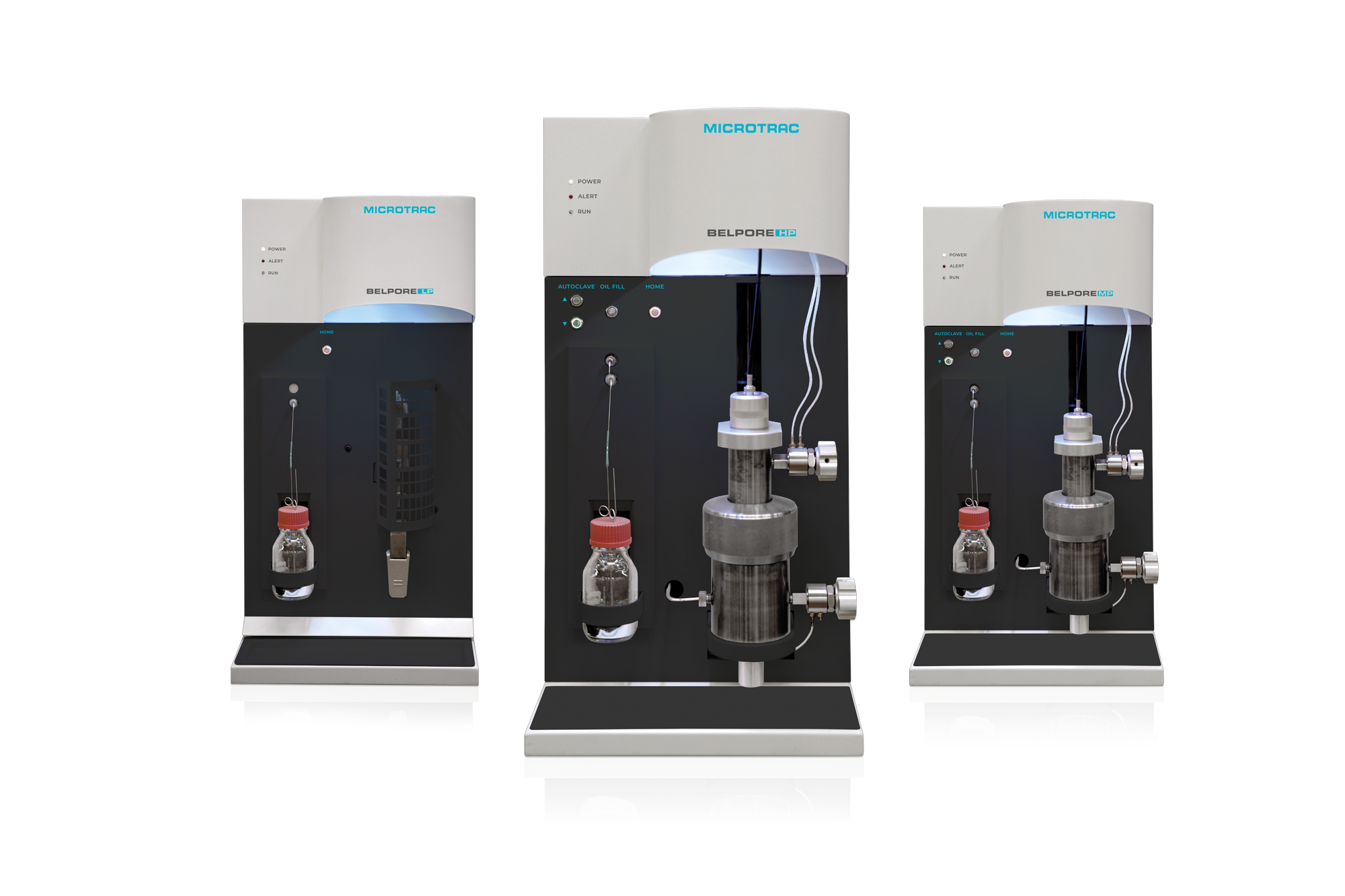
How Does MICROTRAC's BELORE Instruments Characterize Larger Pores in Coatings?
MICROTRAC's BELPORE uses mercury intrusion to measure accessible pore entry sizes and intruded pore volume. Across the series, pressure configurations cover 1 mm to 3.6 nm. Select the configuration for the pore structure and sample.
- Characterize coating layers and molded bodies
- Compare porous fillers and pigment agglomerates
- Extend pore sizes beyond gas adsorption
MICROTRAC's BELPORE series requires mercury-compatible samples and is destructive. Closed pores remain inaccessible; pressure-induced compression can affect results.
Why Measure the Skeleton Density of Pigments and Fillers?
Skeleton density is calculated from sample mass and gas-displaced volume, excluding gas-accessible open pores but including closed pores. It supports comparisons of pigments, fillers, and coating powders. Porosity calculations require complementary envelope-density or pore-volume measurements on a consistent basis, rather than powder-bed packing density alone.
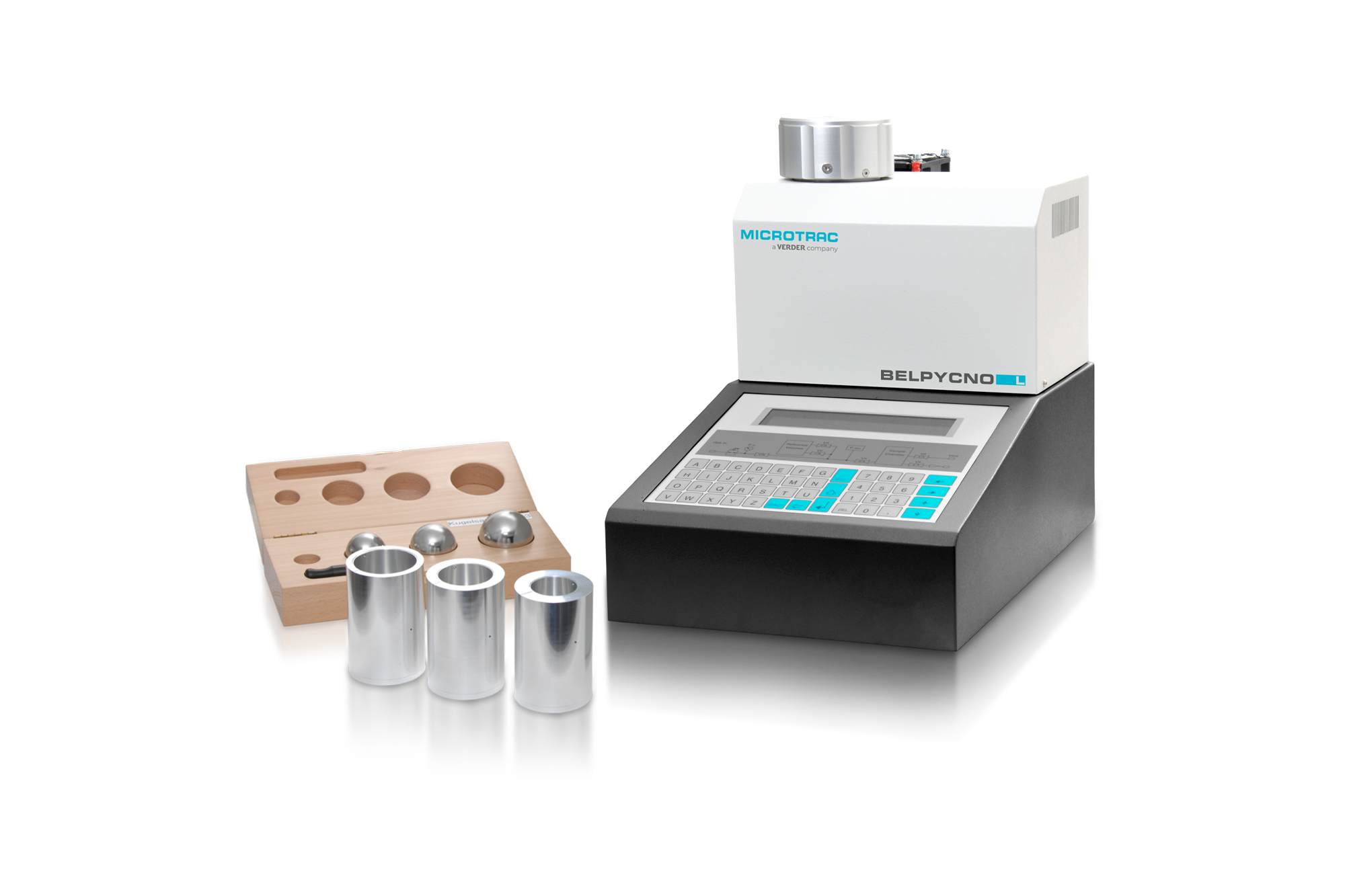
How Does MICROTRAC's BELPYCNO Series Measure the Density of Pigments and Fillers?
MICROTRAC's BELPYCNO L determines skeleton density by gas displacement, usually with helium. The measured volume excludes gas-accessible open pores and includes closed pores. Combined with sample mass, it supports density comparisons between appropriately prepared material batches.
- Determine skeleton density of powders
- Compare raw-material lots
- Support porosity and formulation calculations
The BELPYCNO L suits compatible powders and solids under defined preparation conditions. Bulk, tapped, and envelope density require separate measurements.
How Does Spray Droplet Size Affect Coating and Ink Application?
Droplet size distribution influences coverage, transfer efficiency, film thickness, surface uniformity, and material consumption. Changes to the nozzle, pressure, viscosity, or operating conditions can alter the spray and lead to overspray, uneven films, or waste, so atomization is measured where the coating is applied.
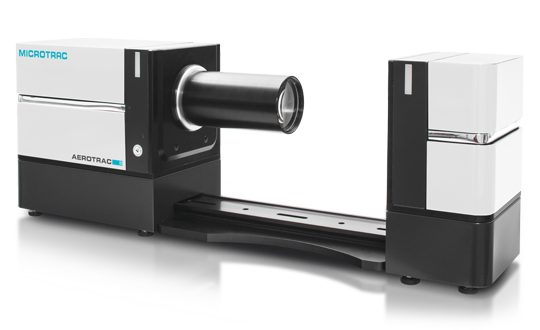
How Does MICROTRAC's AEROTRAC II Optimize Atomization?
The AEROTRAC II analyzer by MICROTRAC uses laser diffraction to measure droplet size distributions directly in the spray plume in real time. Nozzle, pressure, and formulation changes are compared under realistic application conditions without collecting the spray first.
- Compare spray nozzles and atomization conditions
- Reduce overspray and material waste
- Support spray-painting and inkjet development
The AEROTRAC II suits spray process development; pigment size in the formulation and dried film thickness need other methods.


How Can RETSCH Support Powder Coating Sample Preparation?
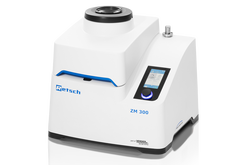
RETSCH provides laboratory mills and sieve shakers for sample preparation. The RETSCH ZM 300 Ultra Centrifugal Mill lists powder coatings among its typical sample materials, and RETSCH sieve shakers support sieve analysis. MICROTRAC measurements then characterize the particle size and shape of the prepared powder before formulation or quality release.
Which Particle Characterization Approach Suits Each Coating Question?
Different coating challenges require different measurements. MICROTRAC offers complementary technologies for pigment size, nanoscale ingredients, powder shape, surface charge, dispersion stability, surface area, pores, density, and spray droplets. The table and product overview below connect typical coating, paint, and ink questions with a suitable MICROTRAC starting point for your laboratory.
Compare MICROTRAC Methods for Coatings, Paints, and Inks
| Your Measurement Question | MICROTRAC's First Choice | What to Keep in Mind |
|---|---|---|
| Size distribution of pigments, fillers, and coating powders, with optional particle images | SYNC Series | Imaging requires the optional camera; results are equivalent-sphere sizes. For routine pigment, filler, and coating-powder size distributions, with optional images and shape information. |
| Size of nano-additives, fine pigments, and inks | NANOTRAC FLEX | Measures from 0.3 nm to 10 µm; not for dry powders. For fine particles, nano-additives, colloidal dispersions, and nanoscale inks. |
| Size and shape of powder coatings and coarser pigments | CAMSIZER Series | Choose the model by size range and dispersion; not for nanoscale particles. For detailed powder size, morphology, agglomerate, and oversize-particle analysis. |
| Dispersant selection and electrostatic stabilization | STABINO ZETA | Zeta potential alone does not predict shelf life. For optimizing dispersants, surfactants, and electrostatic stabilization. |
| Settling, flocculation, and redispersibility of paints and inks | TURBISCAN Series | Physical stability only; no chemical aging. For monitoring settling, clarification, flocculation, phase separation, and redispersibility. |
| Surface area and porosity of pigments and fillers | BELSORP Series | Requires a suitable degassing step. For the surface area and pore structure of pigments, fillers, and porous coating materials. |
| Larger pores in coating layers and molded bodies | BELPORE Series | Destructive; closed pores are not measured. For larger pores and the porosity of coating layers and molded bodies. |
| Skeleton density of pigments, fillers, and powder coatings | BELPYCNO Series | Bulk and tapped density need separate methods. For the skeleton density of pigments, fillers, and powder coatings. |
| Droplet size in spray and inkjet application | AEROTRAC II | Measures droplets, not pigment size in the formulation. For real-time droplet size measurement during spray and inkjet application. |
Combining these techniques gives formulators a clearer understanding of how raw-material properties, dispersion conditions, and application parameters influence final coating performance.
Know which instrument fits your lab?
Which Coating, Paint, and Ink Applications Can Microtrac Support?
MICROTRAC supports applications involving pigments, fillers, powder coatings, inks, liquid paints, nano-additives, and spray processes. The analytical question determines whether particle size, shape, surface charge, dispersion stability, surface area, or droplet size is needed. The examples below connect these properties with development, production, and quality-control tasks.
- Pigment and filler size and shape analysis
- Paint formulation particle analysis
- Powder coating particle size analysis
- Toner powders for laser printing and copying
- Nanoparticle and functional-additive characterization
- Ink particle size and zeta potential measurement
- Dispersant and surfactant optimization
- Quality control of dispersions and suspensions
- Accelerated coating dispersion stability testing
- Shelf-life and redispersibility evaluation
- Surface area, porosity, and density analysis
- Spray droplet and atomization optimization
Not sure which method fits your material? MICROTRAC application specialists recommend a suitable method and instrument and discuss whether a measurement on your actual sample helps the decision.
Which Application Notes Support Coating, Paint, and Ink Analysis?
MICROTRAC application notes and Knowledge Base articles show practical examples for pigments, powders, inks, and dispersion stability. Match each report to the material and measurement objective.
Related MICROTRAC industry pages:

Metallic Effect Pigments
Combined laser diffraction and dynamic image analysis of metallic effect pigments with MICROTRAC's SYNC series.
Ink: Measurement of Particle Size and Zeta Potential
Size and zeta potential of high-concentration inks, measured with the historical NANOTRAC WAVE II.
Characterizing high concentration pigments and inks
Particle size and zeta potential of inks in pigment dispersions at high concentration.

Controlling critical coagulation of pigments and fillers
MICROTRAC's STABINO ZETA with NANOTRAC FLEX detects coagulation of a coating dispersion by tracking zeta potential and size.
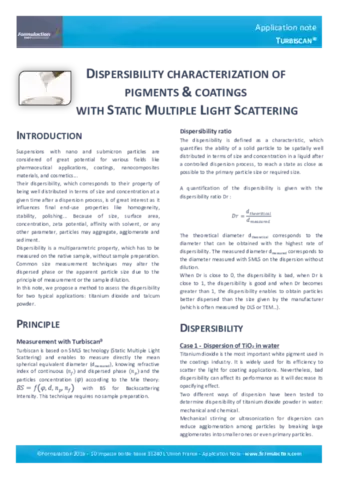
Dispersibility of pigments and coatings
MICROTRAC's TURBISCAN example on how pigments and coating ingredients disperse.

Ink stability and packing
MICROTRAC's TURBISCAN example on the stability and sediment packing of inks.
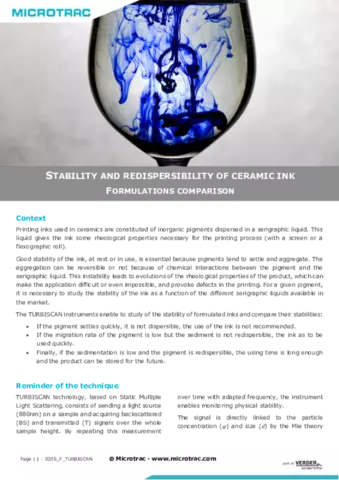
Stability and redispersibility of ceramic ink
MICROTRAC's TURBISCAN example on the stability and redispersion of ceramic inks.


How Can MICROTRAC Help Solve a Coating Formulation or Quality-Control Challenge?
Whether the issue is pigment agglomeration, inconsistent color, powder-coating variation, dispersion instability, or spray performance, MICROTRAC specialists help connect measurable particle properties with formulation and production outcomes. Describe the material, the formulation state, and the quality question to identify the most appropriate analytical approach.
Share these details with a MICROTRAC specialist to start the discussion.