




Particle Size and Stability Analysis for Food and Beverages Food & Beverage
Particle size, shape and dispersion behavior influence texture, mouthfeel, appearance, dissolution, flow and shelf life across food and beverage products. The relevant particles may be dry ingredients, spray-dried granules, droplets in an emulsion, proteins in a beverage or suspended solids that must remain uniformly distributed.
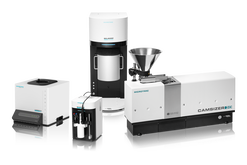
MICROTRAC technologies support particle size analysis for food and beverages from incoming ingredient control through process development and final-product quality assurance. By linking measurable particle properties to milling, mixing, homogenization, spray drying, reconstitution and storage behavior, food scientists can make faster, more objective decisions without relying only on sensory or visual assessment.

Connect Particle Data with Sensory Quality and Processing
Food particle analysis is most useful when the measurement is connected to the quality attribute or process step that matters. Depending on the product, characterization can help teams:
- Maintain consistent texture, mouthfeel and appearance from batch to batch
- Control powder flow, packing, mixing, dissolution and rehydration
- Compare milling, grinding, homogenization and spray-process conditions
- Identify agglomerates, oversized particles or changes in ingredient morphology
- Reduce sedimentation, creaming, flocculation and phase separation in beverages and emulsions
- Evaluate dispersants, proteins, stabilizers and formulation conditions
- Detect product variation before release and support faster formulation screening
Because food systems range from coarse granules to nanoemulsions, no single measurement covers every question. The strongest workflow starts with the physical form of the product and the consumer or processing attribute that needs to be controlled.
Food Powders and Granules: Size, Shape and Batch Consistency
Coffee, sugar, cocoa, flour, milk powder, seasonings and other granular foods can differ substantially in both particle-size distribution and morphology. These differences affect flow through hoppers and dosing systems, mixing behavior, packing, extraction, dissolution and the sensory properties of the finished product.
Food powder particle analysis can therefore provide a more objective basis for raw-material specifications and process control than sieve results or bulk observations alone.
Combine Size Distribution and Particle Images with SYNC
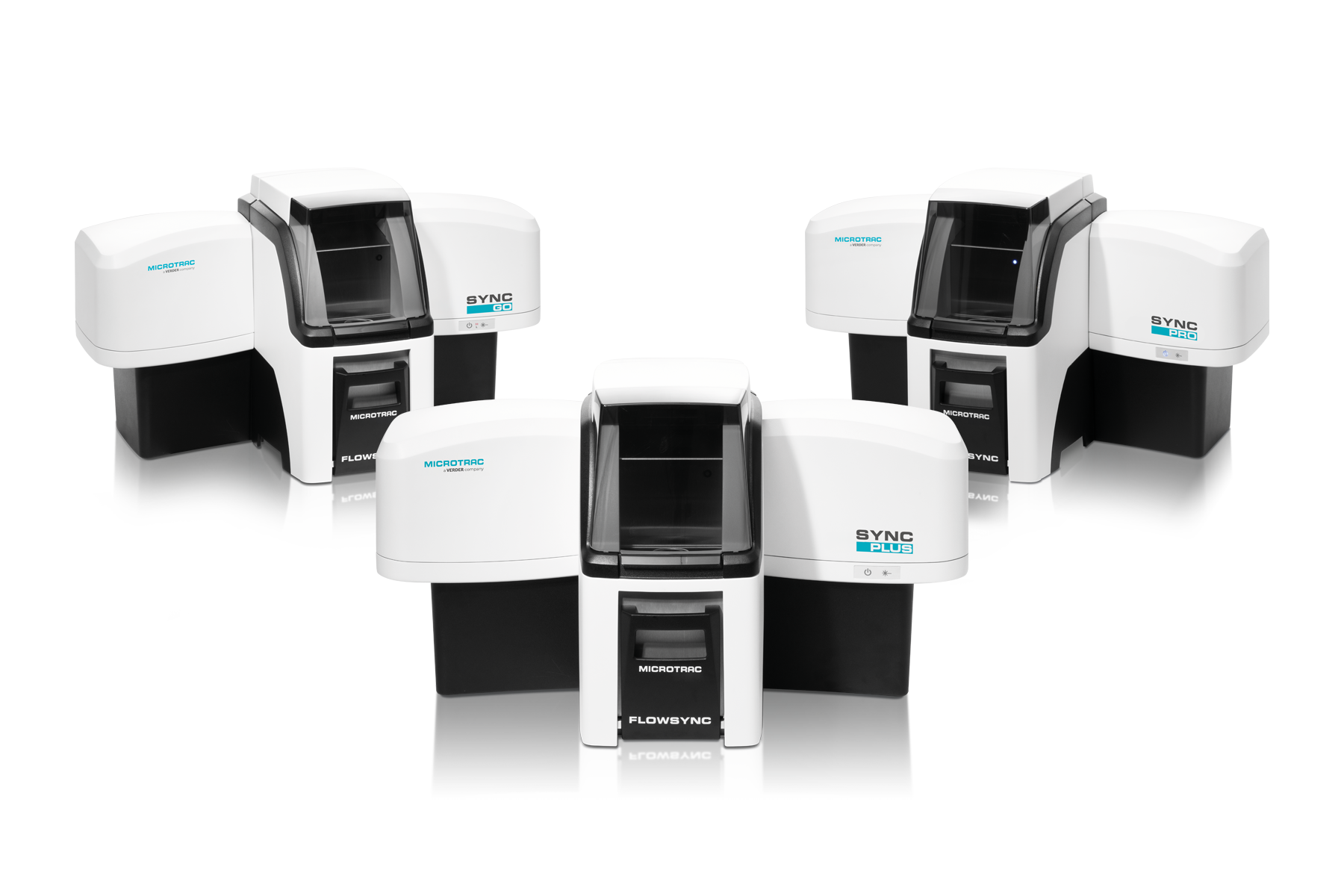
MICROTRAC SYNC combines laser diffraction with dynamic image analysis to measure particle size while adding visual and quantitative information about shape and agglomeration. The combination is useful when a size distribution alone does not explain why two powders process or perform differently.
For food manufacturers, SYNC can support:
- Rapid particle-size measurement of dry and liquid food samples
- Comparison of grinding and milling conditions for coffee, cocoa, flour and other ingredients
- Detection of agglomerates or unexpected coarse fractions
- Incoming ingredient qualification and batch-to-batch quality control
- Investigation of particle changes associated with processing or handling
Food Powders and Granules: Size, Shape and Batch Consistency
Coffee, sugar, cocoa, flour, milk powder, seasonings and other granular foods can differ substantially in both particle-size distribution and morphology. These differences affect flow through hoppers and dosing systems, mixing behavior, packing, extraction, dissolution and the sensory properties of the finished product.
Food powder particle analysis can therefore provide a more objective basis for raw-material specifications and process control than sieve results or bulk observations alone.
Quantify Granule Morphology with CAMSIZER
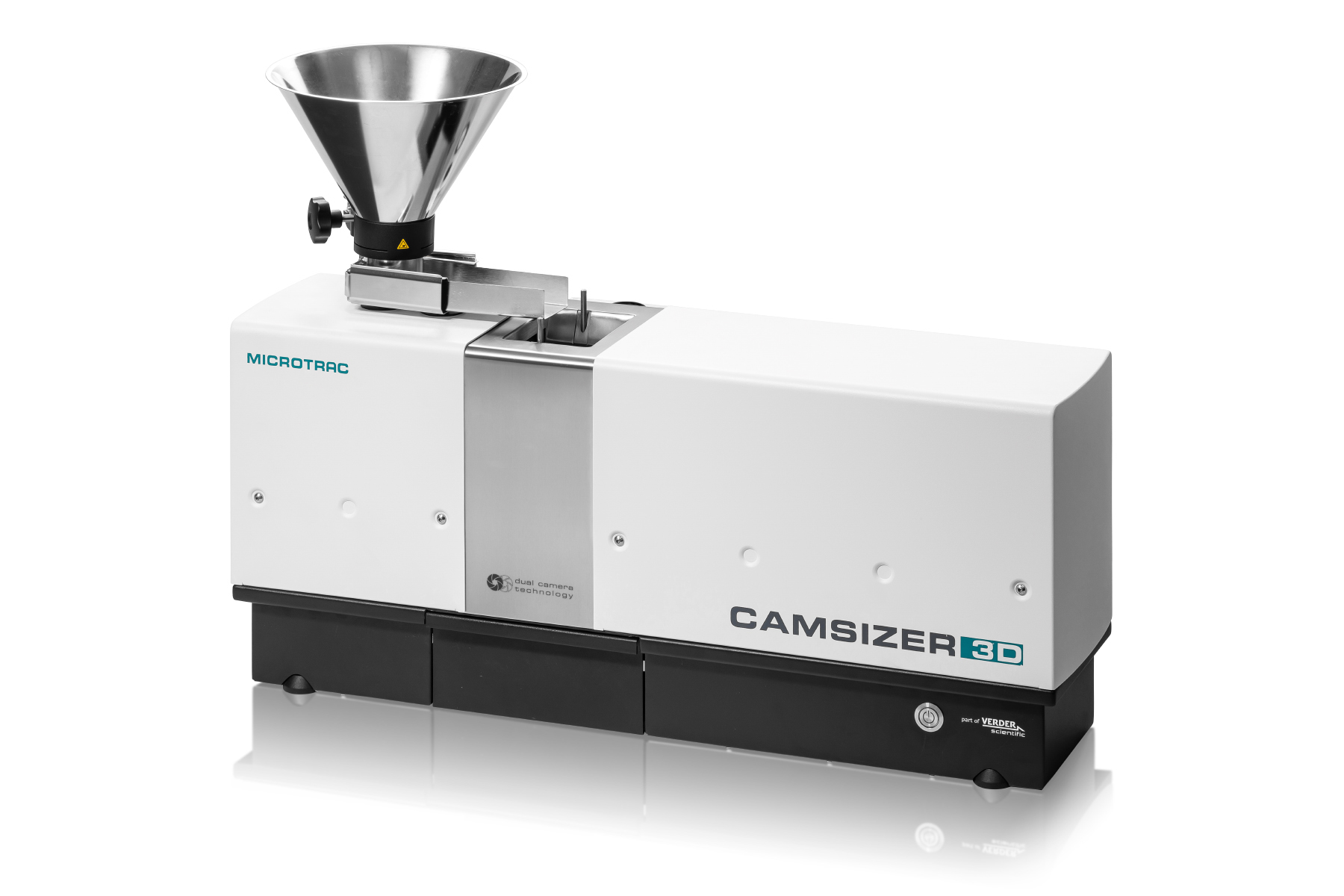
MICROTRAC CAMSIZER instruments use dynamic image analysis to determine particle size and shape parameters such as length, width, aspect ratio and roundness across powders, grains and granulates. This is particularly valuable for materials where shape affects processing or the consumer experience.
CAMSIZER data can help food producers evaluate coffee grind uniformity, sugar crystal shape, spray-dried milk powder, grains and other irregular ingredients; detect out-of-specification material quickly; and optimize milling, blending and classification processes. For products with broad distributions, image-based analysis also provides information that conventional sieving cannot capture as directly.
Fine Dispersions, Nano-Ingredients and Nanoemulsions
Some food formulations contain colloidal or submicron ingredients that require a different analytical approach. Emulsifiers, nano-encapsulated ingredients, fine stabilizers and nanoemulsions may show changes in particle size or aggregation that directly affect appearance, delivery performance and physical stability.
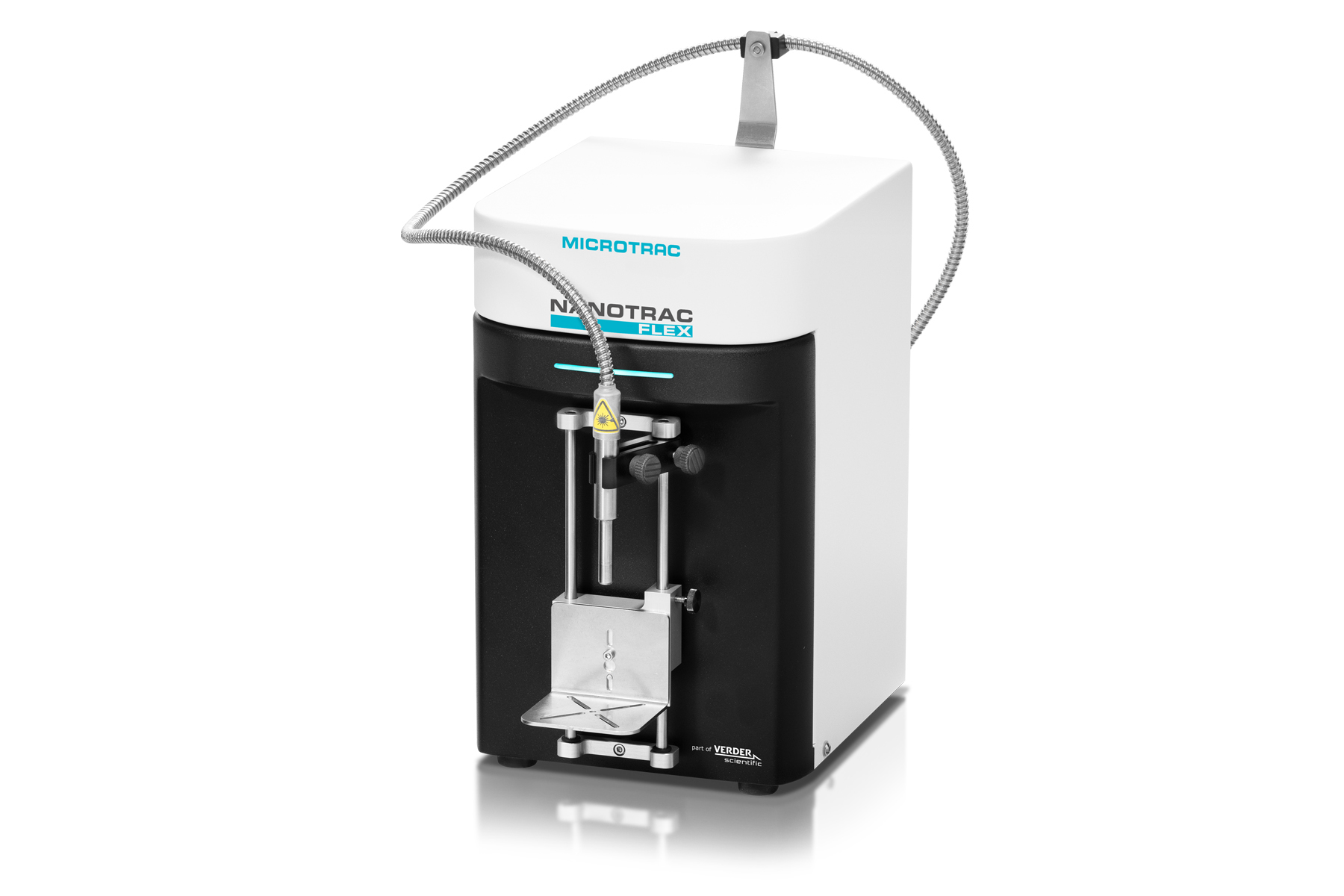
Measure Submicron Ingredients with NANOTRAC FLEX
MICROTRAC NANOTRAC FLEX uses dynamic light scattering for sensitive particle-size analysis in the submicron and nanometer range. It complements laser diffraction and image analysis when the dispersed phase is too fine for conventional powder-focused methods.
For food and beverage R&D, this can support formulation comparisons, detection of aggregation, assessment of fine colloidal ingredients and characterization of nano-scale dispersions before they are incorporated into a finished product.
Beverages, Emulsions and Protein Dispersions
Beverages and food emulsions may contain droplets, proteins, colloids or suspended particles that interact during processing and storage. A formulation can look acceptable immediately after production and still develop clarification, sedimentation, creaming or aggregation later. Beverage stability analysis therefore benefits from combining information about particle size, surface charge and direct physical stability.
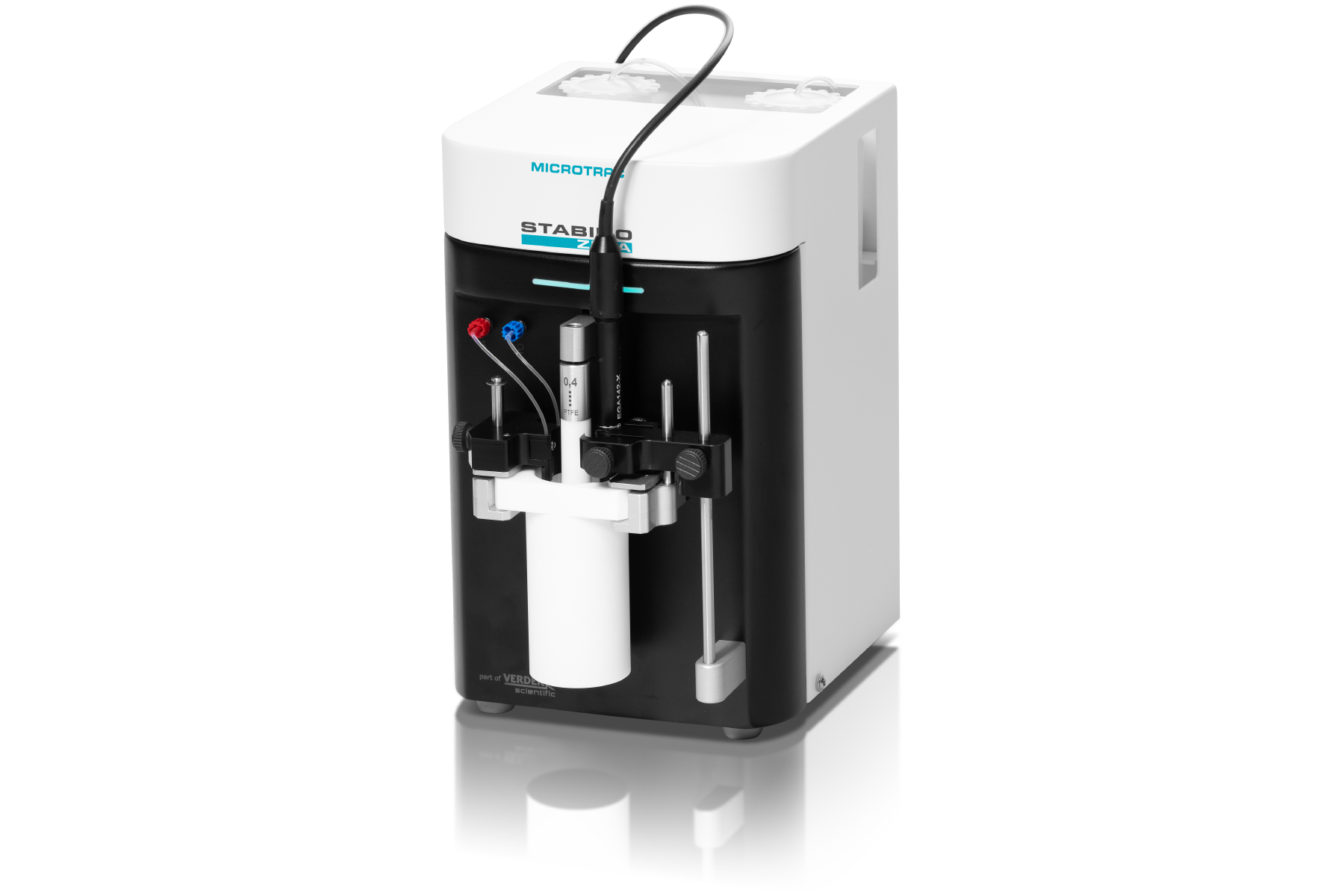
Understand Colloidal Interactions with STABINO ZETA
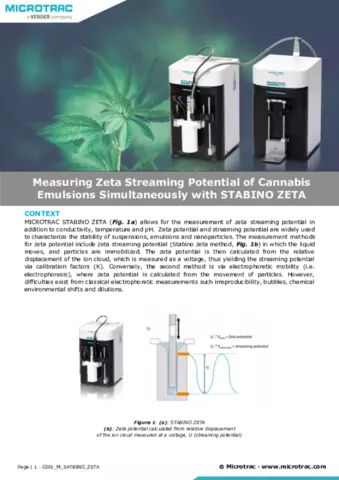
MICROTRAC STABINO ZETA uses streaming potential technology to measure zeta potential and support charge titration in concentrated dispersions. Measurements can be made with minimal sample alteration, which is important when dilution would change the original formulation behavior.
Food emulsion zeta potential measurements can help formulators compare stabilizers, proteins and process conditions; investigate aggregation risks; and understand how electrostatic interactions contribute to the stability of beverages, dairy systems, plant-based products, sauces and other dispersed foods.
Beverages, Emulsions and Protein Dispersions
Beverages and food emulsions may contain droplets, proteins, colloids or suspended particles that interact during processing and storage. A formulation can look acceptable immediately after production and still develop clarification, sedimentation, creaming or aggregation later. Beverage stability analysis therefore benefits from combining information about particle size, surface charge and direct physical stability.
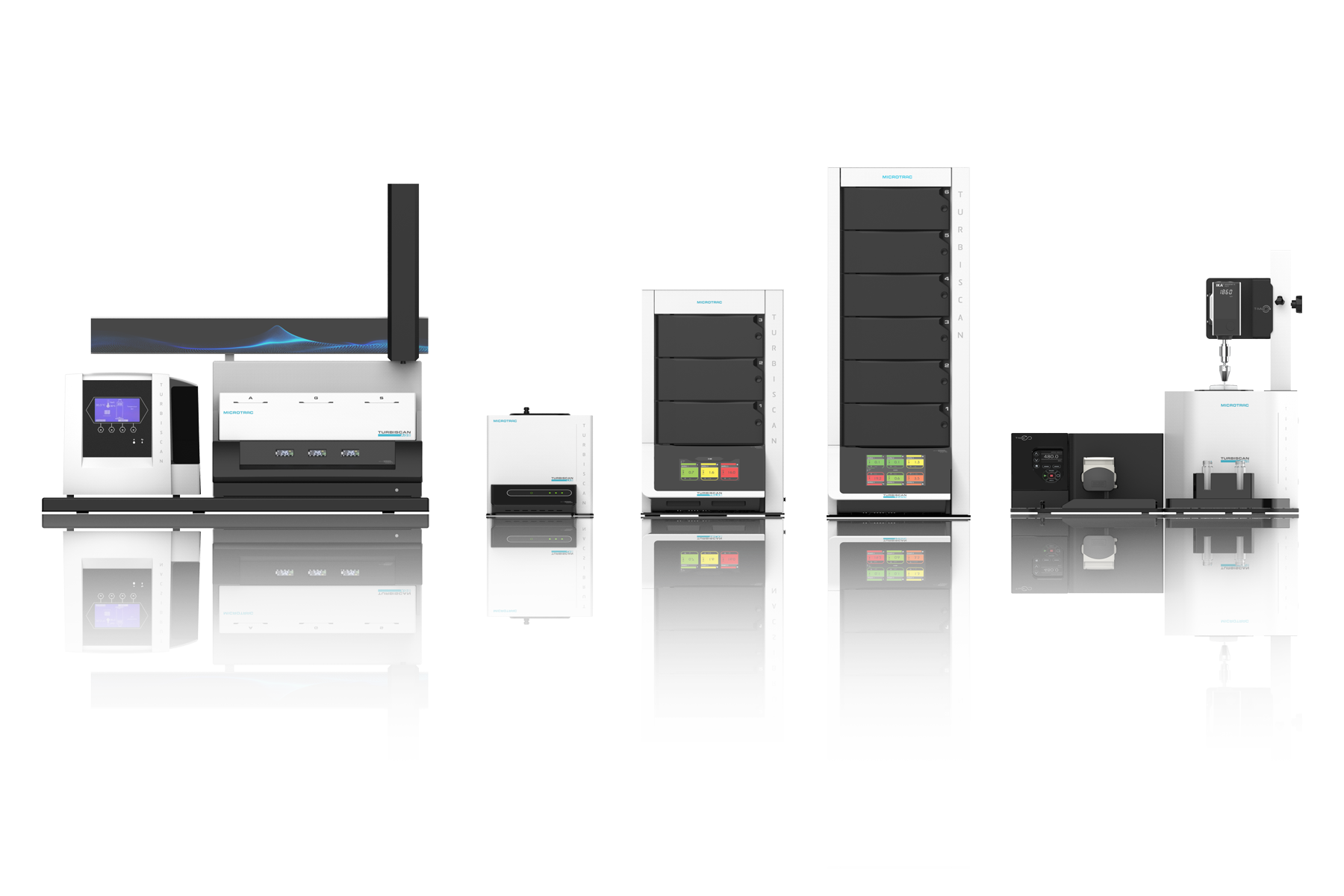
Detect Physical Instability Earlier with TURBISCAN
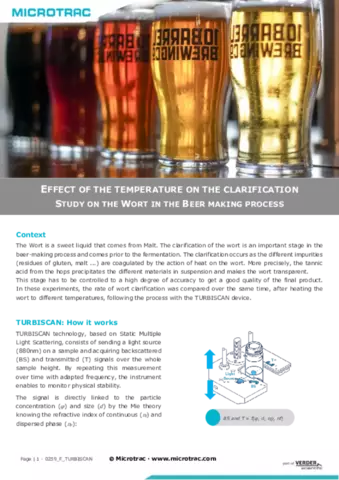
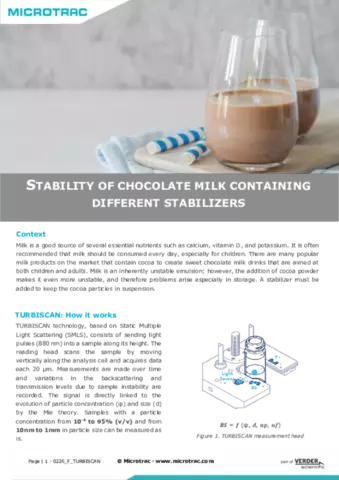
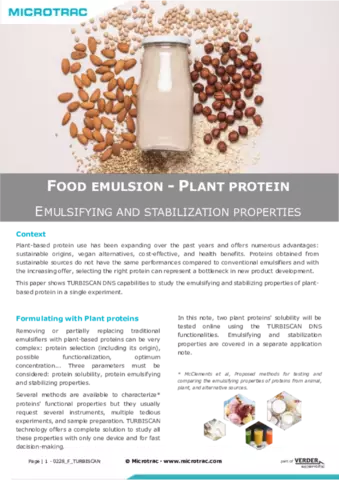
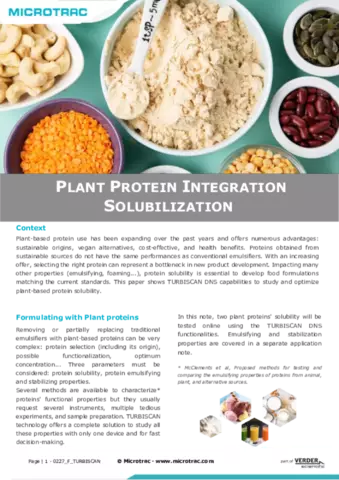
MICROTRAC TURBISCAN uses static multiple light scattering to monitor changes throughout a sample before they are necessarily visible to the eye. It can track sedimentation, creaming, clarification, flocculation, aggregation and other destabilization phenomena in concentrated food systems.
This direct approach helps R&D and quality-control teams rank formulations sooner, compare stabilizer systems objectively and identify the mechanism behind an instability rather than waiting only for a pass/fail visual shelf test. It is applicable to beverages, dairy and plant-protein systems, sauces, emulsions and other products where long-term physical stability is a critical quality attribute.
Spray Drying, Encapsulation and Droplet Size
Spray drying is widely used to produce milk powders, flavors, seasonings, encapsulated actives and other functional ingredients. Droplet-size distribution during atomization influences drying behavior, final powder size, solubility, flowability and the consistency of the resulting product.
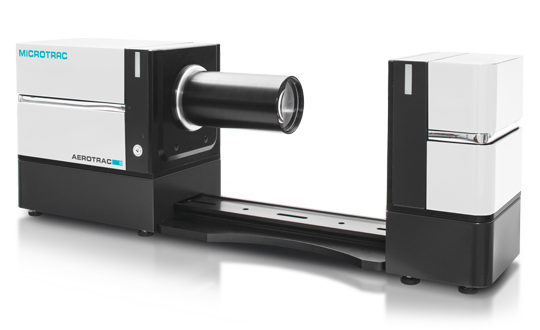
Optimize Atomization with AEROTRAC II
MICROTRAC AEROTRAC II provides real-time spray and droplet-size measurement, allowing development teams to compare nozzles, operating settings and formulation changes directly at the atomization step.
By connecting spray conditions with the characteristics of the resulting powder or coating, AEROTRAC II can support more consistent spray-drying processes, flavor or nutrient encapsulation and other applications where droplet control is an important process variable.
Surface Area and Porosity of Dehydrated and Porous Ingredients
Specific surface area and pore structure can influence adsorption, dissolution, liquid uptake and reconstitution behavior in porous or dehydrated ingredients. These parameters are particularly relevant when developers need to understand why powders with similar particle sizes show different functional behavior.
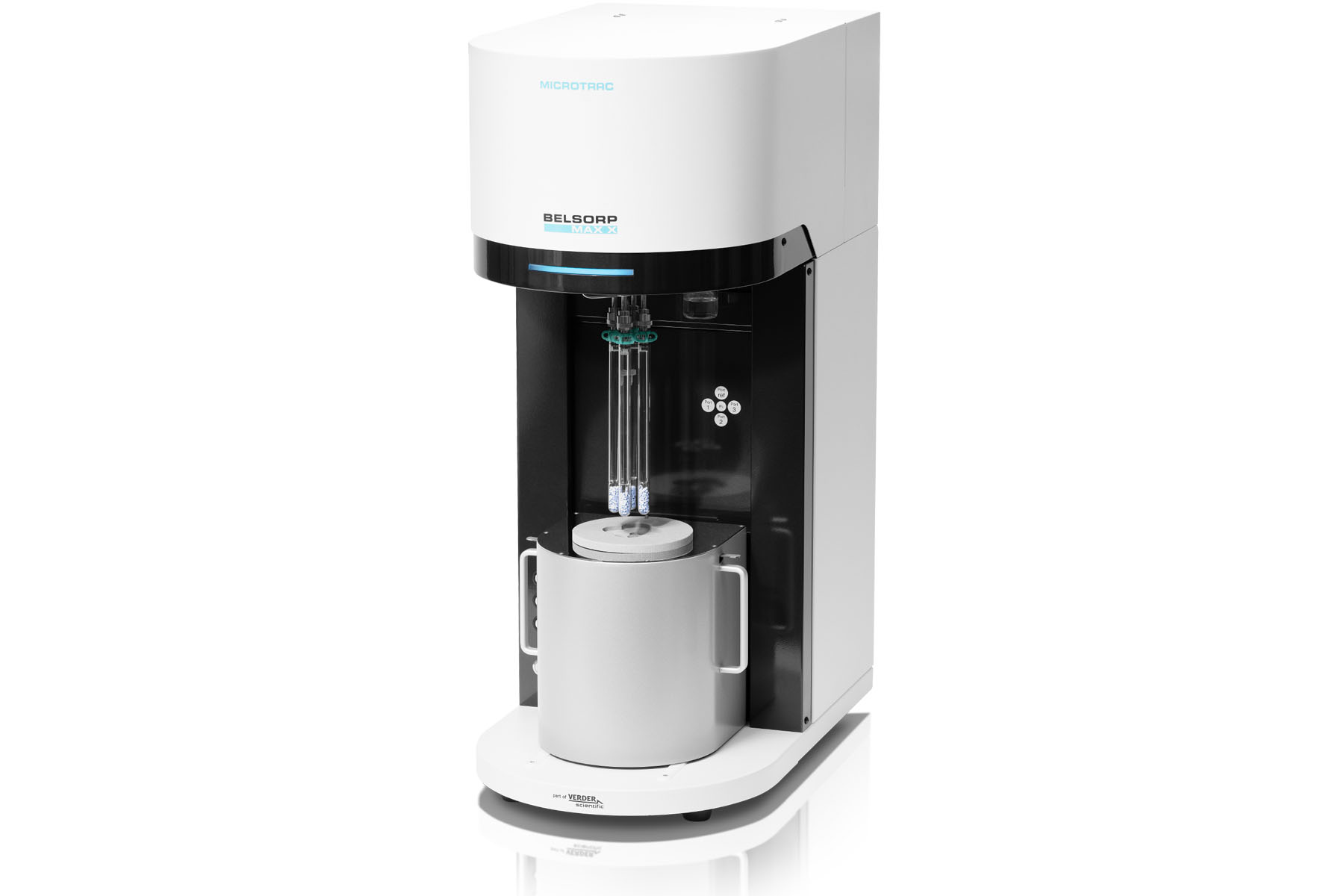
Add Surface Information with BELSORP
MICROTRAC BELSORP instruments use gas adsorption techniques to characterize specific surface area and pore structure. For selected food applications, these measurements can complement particle-size data when evaluating porous carriers, dehydrated powders and materials whose interaction with liquids or flavors depends on accessible surface area.
Choose the Measurement That Fits the Food System
Routine particle-size distributions with complementary shape and agglomeration information for powders and liquid samples.
Detailed size and morphology of coffee, sugar, spray-dried powders, grains and other irregular granules.
Fine dispersions, colloids and nano-scale ingredients.
Colloidal interactions and formulation optimization in beverages and emulsions.
Sedimentation, creaming, clarification, aggregation, reconstitution and accelerated formulation comparison.
Real-time droplet-size measurement in spray drying, coating and encapsulation development.
Specific surface area and pore structure for selected porous or dehydrated food ingredients.

Key Applications in Food & Beverage
- Coffee, cocoa, flour, sugar, grains and other food powder particle analysis
- Milk powder and spray-dried ingredient size, shape and reconstitution behavior
- Beverage stability analysis for clarification, sedimentation and suspended solids
- Food emulsion zeta potential and dispersion optimization
- Plant-protein solubilization, emulsification and stability studies
- Nanoemulsion and fine-dispersion particle-size characterization
- Spray droplet analysis for drying, encapsulation and coating processes
- Quality control of grinding, milling, blending and classification operations
Application Notes and Technical Resources
Explore practical examples covering coffee, sugar, milk powder, beverages, proteins, emulsions, reconstitution and spray processes.
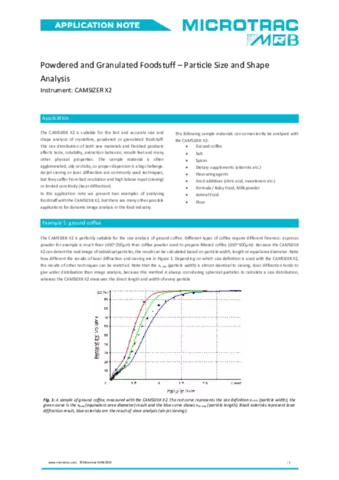

Using Dynamic Image Analysis as an Alternative to Sieving for the quality control of sugar
Size and shape analysis of sugar with CAMSIZER P4 and X2 as an alternative to sieve analysis.
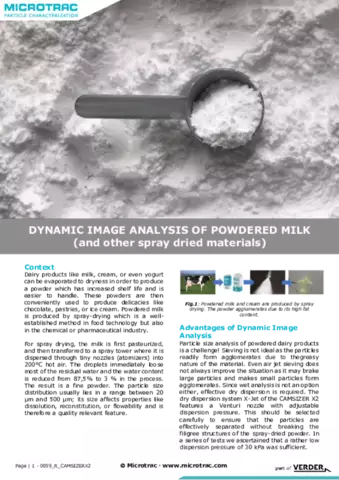

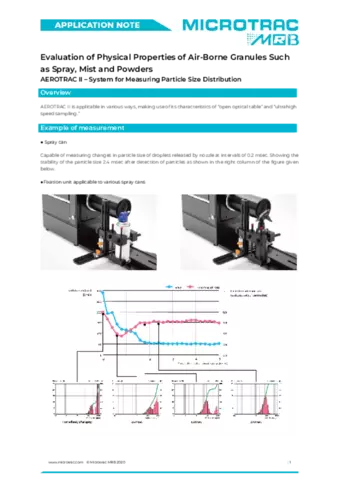







Turn Particle Data into More Consistent Food Products
A useful food-analysis workflow starts with the physical form of the product and the quality attribute that needs to be controlled. Whether the challenge is grind consistency, powder reconstitution, beverage clarification, emulsion stability or spray drying, complementary particle measurements can help connect formulation and process choices with measurable product behavior.
MICROTRAC specialists can help identify an appropriate combination of particle size, shape, charge, stability, spray and surface measurements for the sample and application.
Discuss your product, process and sample requirements with a MICROTRAC specialist.