





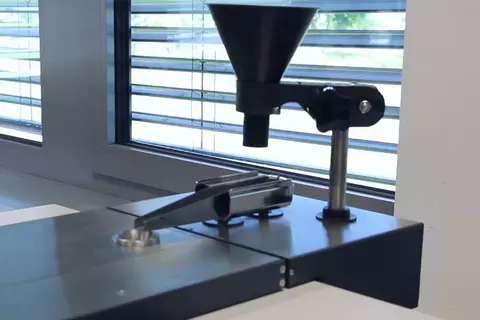


Shorter measurement time. Better optical resolution. More frames per second.
The CAMSIZER X2+ is one of the most powerful, extremely versatile particle size and shape analyzers with a wide measuring range that combines state-of-the-art camera technology with flexible dispersion options. Based on the principle of Dynamic Image Analysis (ISO 13322-2), the CAMSIZER X2+ provides precise particle size and shape information of powders, granules and suspensions in a measuring range from 1 μm to 8 mm.
The CAMSIZER X2+ produces a particle flow which is characterized by an optical system with high resolution. An ultrabright LED stroboscopic light sources and two high-resolution digital cameras achieve a frame rate of more than 420 images per second which are evaluated in real time by a powerful software. Thus, the CAMSIZER X2+ captures the images of hundreds of thousands to several millions of particles with highest accuracy within only 1 to 3 minutes.
The CAMSIZER X2+ provides a wide selection of particle information which allows for comprehensive and reliable characterization of the sample material. It is suitable for use in R&D as well as for routine tasks in quality control.


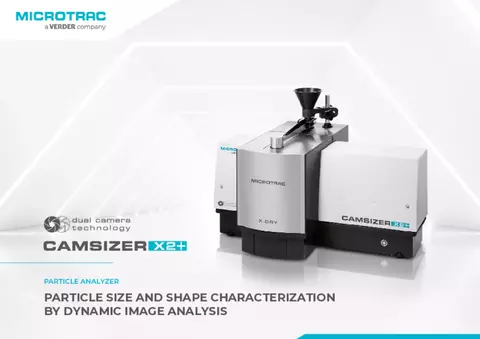
Particle Analyzer CAMSIZER X2+
- Particle size and particle shape analysis from 1 μm to 8 mm with Dynamic Image Analysis (ISO 13322-2)
- Precise analysis of wide size distributions
- Excellent resolution for narrow or multimodal size distributions
- Detection of small amounts of oversized or undersized particles
- Fully comparable to sieve analysis and laser diffraction results
- A wealth of evaluation options (different size models, a variety of shape parameters, particle library, single frame evaluation, etc.)
- Outstanding reproducibility
- Measurement time 1 – 3 minutes, high sample throughput
- Modular „X-Change“ system for dry and wet measurement
- Ultra-strong LEDs and high-resolution cameras for the clearest results
- Easy operation, virtually maintenance-free
Been using this instrument for a while now for particle size analysis of our small molecule APIs. The performance, accuracy & reproducibility is excellent. The amazing part is its ability to work with very small sample size. Very happy with the instrument.
Siddharth Sha
API Holdings
The product is very easy to use; we get a lot more information from this system than we did from our previous analyzer. The staff diligently works with developing and meeting our internal needs and has been more than willing to provide the education and background necessary to get the biggest bang for our buck! We are very pleased with this instrument.
Barbara Bachman
3M Brownwood
Regularly used to characterise and monitor powder during recycling in LPBF. Ease of use and low sample quantity allows results on PSD and morphology to be seen in minutes for quality assurance.
Syed Islam
AMRC - University of Sheffield
Trusted reviews provided by

Particle Analyzer CAMSIZER X2+ Extremely Wide Measuring Range due to Dual Camera Technology
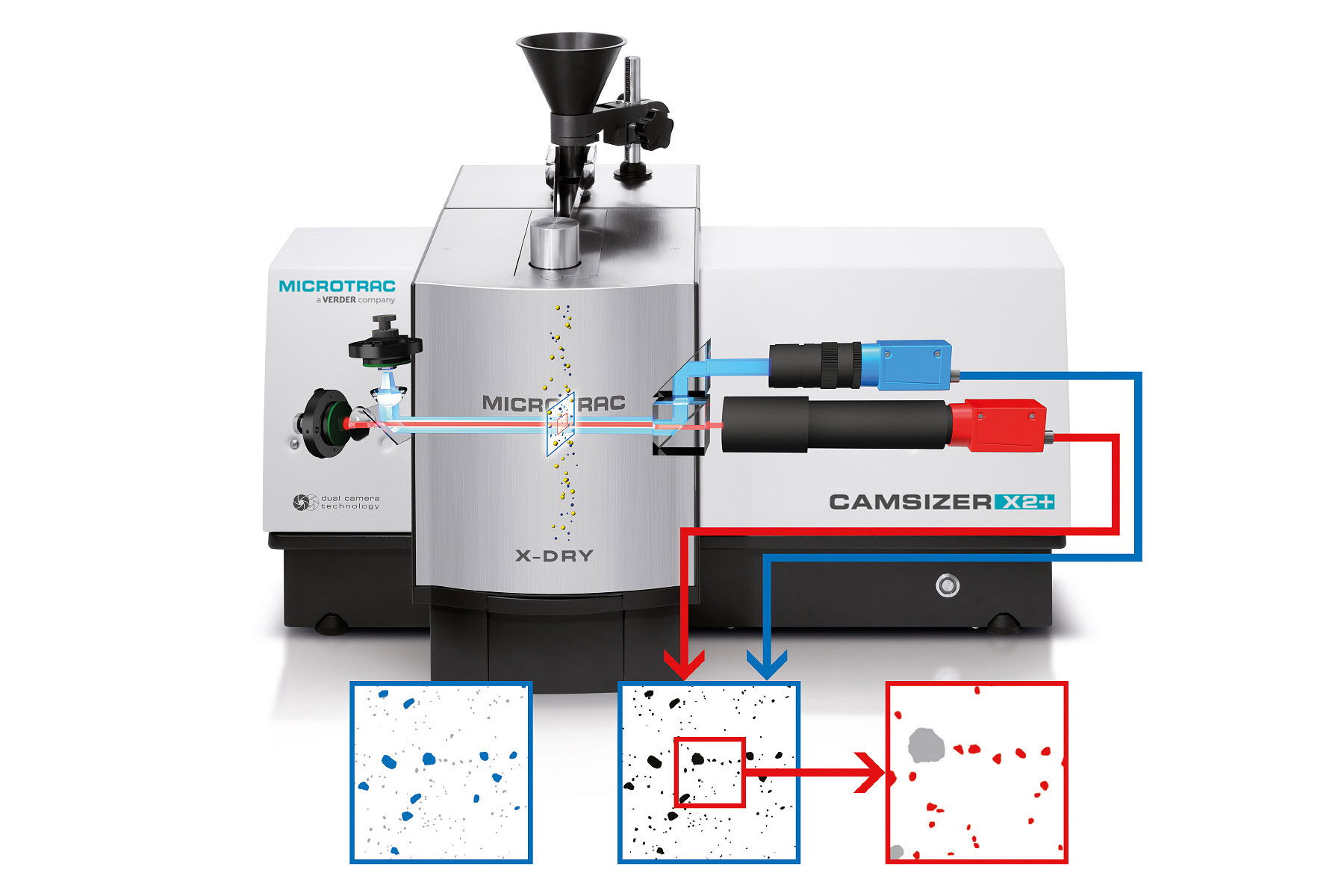
Microtrac’s unique dual camera technology is a landmark in the development of Dynamic Image Analysis (DIA). By simultaneously employing two cameras with different magnifications, extremely wide dynamic measuring ranges are archieved. This is accomplished without hardware adjustments or modifications and without compromising accuracy. Each camera is specialized for one measuring range.
The ZOOM camera analyzes fine particles with highest precision whereas the BASIC camera detects the larger particles with excellent statistics. A special algorithm combines the information provided by both cameras and delivers the exact size distribution in a possible range of more than three decades!
This arrangement resolves a significant drawback of many image analysis systems that employ only one camera, e. g. microscopes. Such instruments either cannot correctly report the fine particles in wide size distributions, or the large particles are not captured due to the small field of view.

Measurement Principle
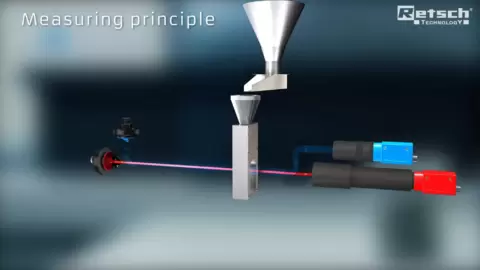
Two cameras operate simultaneously during measurement: the BASIC camera (blue) analyzes the larger particles, the ZOOM camera (red) captures the small particles. This procedure ensures optimum measurement conditions for all particle sizes in a distribution.

Particle Analyzer CAMSIZER X2+ Modular X-Change System
Correct sample preparation and dispersion of the particles before they pass the measurement field are as important as the actual analysis. Particularly for fine powders which tend to agglomerate, sufficient dispersion is crucial to the reliability of the measurement results. Therefore, various modes of sample feeding help to achieve separation of the agglomerates without destroying individual particles. Our Modular X-Change System fulfils this requirement in a perfect way.
Elaborate Design for Maximum Flexibility
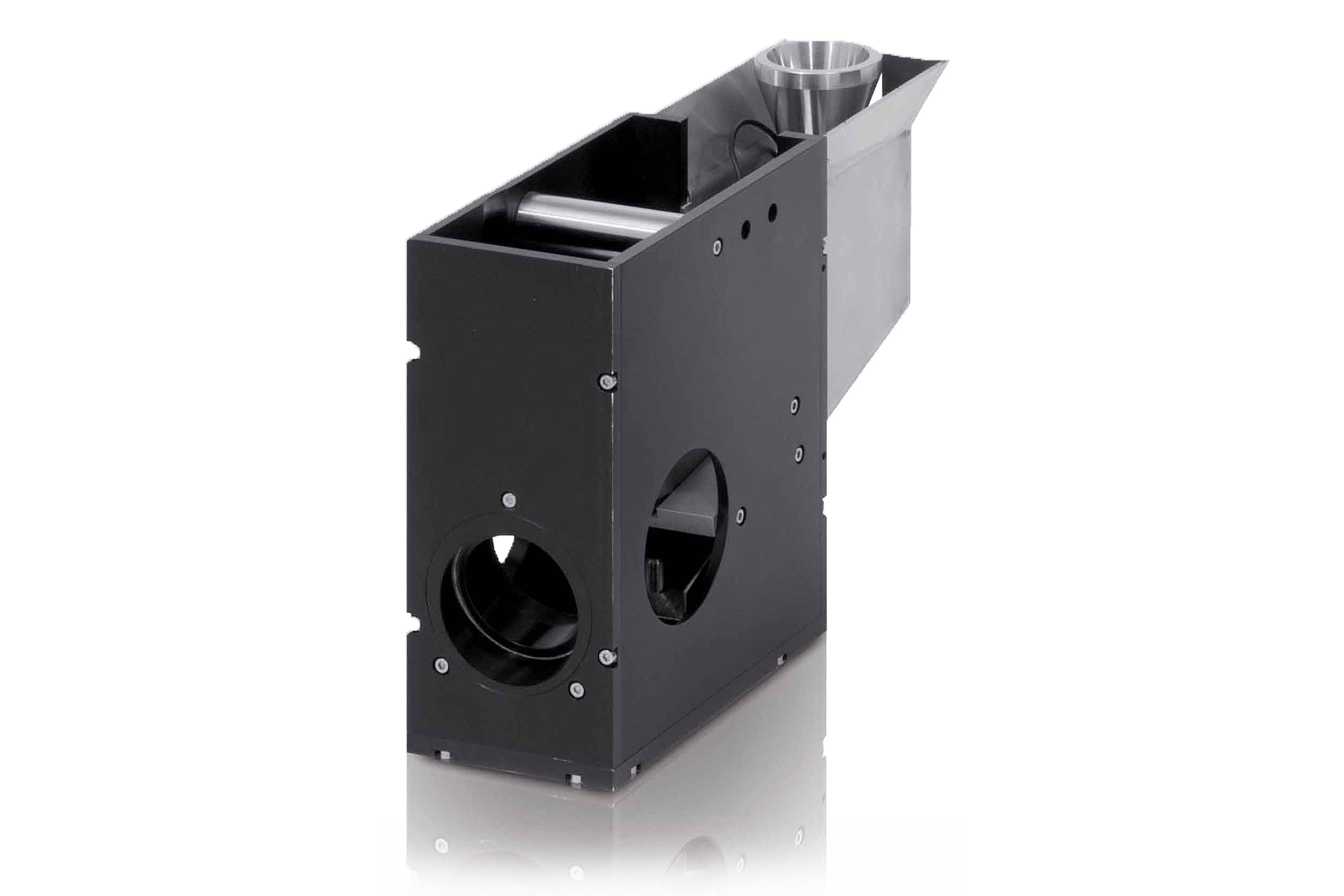
The modular “X-Change” system of the CAMSIZER X2+ offers three alternative dispersion options, permitting the selection of the optimum method for each sample type. The user may choose between wet dispersion with X-Flow or dry measurement either in free fall with X-Fall or in an air flow with X-Jet. The modules and cartridges are quickly and easily exchanged which makes working with the CAMSIZER X2+ convenient and safe.
Dispersion by compressed air
The X-Jet module disperses the sample via a Venturi nozzle and is suitable for the effective analysis of powders. The actual measurement of the particles takes place in the air stream. Dispersion pressure may be set between 0 kPa and 460 kPa. This ensures optimum analysis conditions for all sample types.

Dispersion in liquids
CAMSIZER X2+ also offers the option to analyze particles in liquids with the X-Flow module. The suspension flows in a closed circle through a glass cell where the cameras record the particle images. The integrated ultrasonic unit further aids in the dispersion process.

Dispersion by gravity
The X-Fall module is used for non-destructive measurement of sensitive samples in free fall to minimize particle breakage. The sample can be recovered after the analysis.
Air Pressure Dispersion with X-Jet
Many materials tend to agglomerate due to surface forces. The X-Jet module effectively disperses the particles in an air flow while passing through a Venturi nozzle. The dispersion pressure can be set as required for individual particles. For sensitive granules, for example, reduced pressure ensures non-destructive measurement. After passing the measurement field, the sample is automatically removed from the analyzer by a vacuum cleaner.

Wet Measurement with X-Flow
The wet module X-Flow analyzes suspensions in a size range from 0.8 μm to 1 mm. The sample moves within a closed loop from the dispersion bath to the flow cell where the camera system captures the particle images. X-Flow comes with an ultrasonic bath and strong centrifugal pump to ensure efficient dispersion. Suitable dispersion media are water, alcohol, and also nonpolar organic solvents.

Gravity Dispersion with X-Fall
Flowable, unagglomerated samples can be analyzed by using the X-Fall module. The measurement is non-destructive because the particles directly fall from a chute through the field of view. X-Fall is suitable for particle sizes up to 8 mm; the detection sensitivity for over-sized grains is extremely high. In contrast to dispersion by air pressure, the sample can be recovered after the measurement with X-Fall.

Particle Analyzer CAMSIZER X2+ Only Image Analysis Provides Information on Particle Shape
Bulk material properties like density, flowability, compactibility, conveying characteristics and surface condition are influenced by particle shape. This makes these parameters a crucial process and quality indicator in many application areas.
Examples:
- Angularity of abrasives
- Analysis of broken fractions in granules
- Detection of agglomerates in glass beads
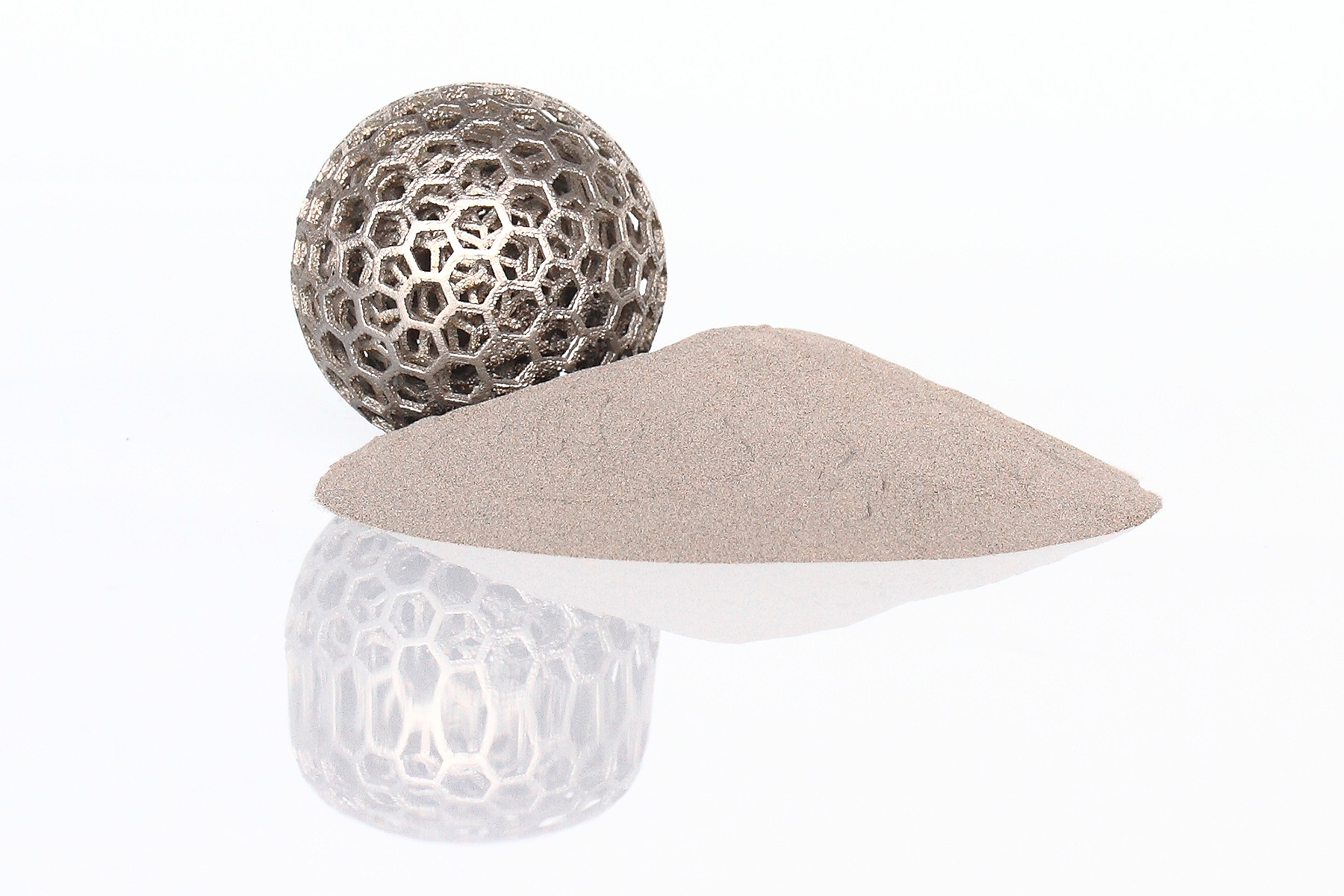
- Analysis of the roundness of plastic or metal powder particles for Additive Manufacturing (direct influence on flowability and packing density)
- Length and diameter of needle-shaped crystals
- Analysis of the roundness of sand particles to evaluate the usability as construction material or proppant, or for geological examinations
Various parameters are available for shape quantification. These include width/length ratio (aspect ratio), circularity (calculated from area-to-perimeter ratio), symmetry, convexity, and compactness. Roundness is calculated from the curvature of the particles’ corners.
Particle Analyzer CAMSIZER X2+ Comparability to Sieve Analysis and Laser Diffraction
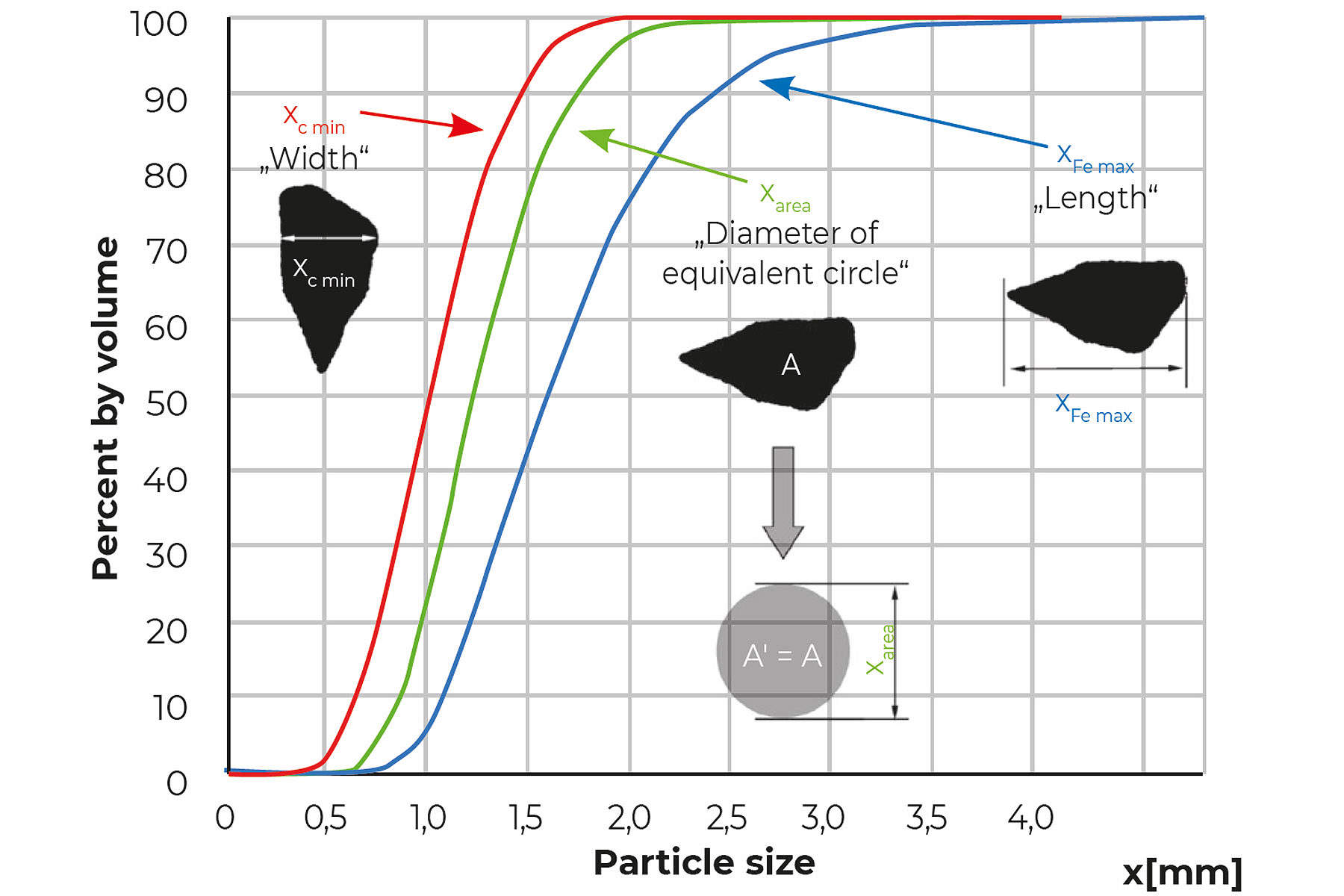
„Size“ is only defined unambiguously for spherical particles: the diameter is identical in all directions and orientations. For non-spherical particles, however, the dimensions can vary strongly, depending on the orientation and direction of measurement. Traditional sieve analysis, for example, separates particles on a wire mesh sieve stack with different aperture sizes into fractions.
The smallest possible sieve aperture that a particle can pass is defined by the particle’s smallest projection area. Hence, sieve analysis measures particles in a preferential orientation and provides information which is mostly based on the width of the particle. Particle size analysis with Laser Diffraction (LD) relates all measuring data to the diameter of a spherical particle model. Only dynamic image analysis offers different size definitions which can be ascertained simultaneously. This makes the results comparable to those obtained with other techniques.
The outstanding strength of DIA is the possibility to measure width and length of a particle and to provide a size distribution based on these parameters. The particle width (red curve) can easily be compared to sieve analysis results.
Optimum configuration for each application Accessories and Options
Microtrac offers a variety of hoppers and chutes for special applications. Dispersion nozzles and cuvettes are available in different aperture sizes to ensure optimum conditions for each measurement. Calibration of the CAMSIZER X2+ only takes one minute and can be carried out by using a high-precision reference reticle.

Hoppers and chutes
To achieve optimum feeding conditions, even for adhesive powders, we offer different chutes made of either stainless steel or aluminium hard-coat.
The hoppers can be made of aluminium or stainless steel and can hold up to 0,6 l of sample. The hopper is adjustable in height which promotes uniform flow of the sample.

Dispersion nozzles
There are nozzle sets with different sizes of the orifice available for the X-Jet module. The standard aperture is 14 mm x 4 mm which is suitable for most samples to be analyzed. For very large or very small particles, other nozzle sizes can be advantageous.

Reference object
By using a high precision reference object made by electron lithography, which simulates differently sized particles, the CAMSIZER can be recalibrated in a few seconds at any time. This means that the requirements of modern test agent monitoring are fulfilled.

Protective hood (X-Jet, X-Fall)
The protective hood prevents the release of dust to the environment during the measurement. It can be flushed with inert gas for samples that should not be too long exposed to the ambient air. Furthermore, the hood will reduce the noise level by more than 5 dB.

Cuvettes (X-Flow)
Three high quality quartz glass cuvettes are available for the X-Flow module. The cuvettes have different gap widths of either 4 mm (standard), 2 mm or 1 mm.

Freefall shafts (X-Fall)
For the X-Fall module, the standard aperture is 7 mm x 14 mm, for larger particles a freefall unit with 14 mm x 14 mm is available.
Particle Analyzer CAMSIZER X2+ Extended Measuring Ranges
Due to the unique two-camera principle, all measurement ranges can be analyzed in one measurement run, without any hardware adjustments.
Measurement range specifications for the diameter of compact particles 1):
- X-Jet (air pressure dispersion)
Standard: 0.9 µm to 2.5 mm with nozzle size 3.8 mm x 14 mm
Alternative: 0.9 µm to 6 mm with nozzle size 9 mm x 14 mm
Alternative: 5 µm to 8 mm with nozzle size 13.5 mm x 14 mm - X-Fall (gravity dispersion) 2)
Standard: 10 µm to 4 mm with nozzle size 7 mm x 14 mm
Alternative: 10 µm to 8 mm with nozzle size 14 mm x 14 mm - X-Flow (wet dispersion) 3)
Standard: 0.9 µm to 1 mm
1) Measurement ranges are sample dependent
2) The lower limit for X-Fall depends on the sample properties (agglomeration). For agglomerating particles the X-Jet or X-Flow module are recommended.
3) The upper size limit for X-Flow depends on the density of the sample material.
Measurement range specifications for fibers and elongated particles available on request.

Everything in View From Start to Finish DIMENSIONS Software
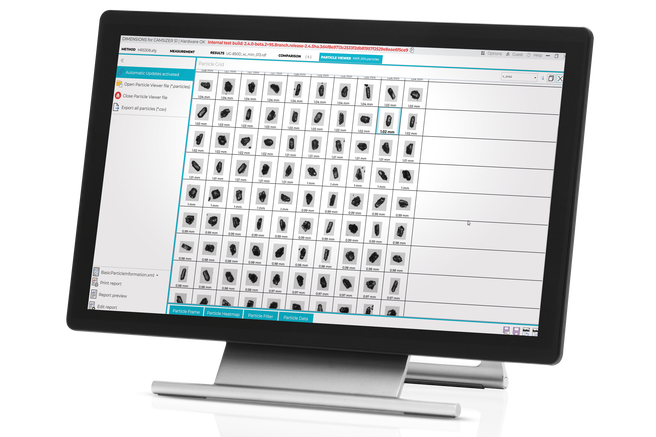
All parameters at a glance: Dynamic Digital Image Analysis provides a wealth of information about the sample material at hand. The powerful DIMENSIONS software records dozens of parameters on each individual particle and presents the results in a clear, standard-compliant measurement report that can be adapted to individual needs.
- Intuitive operation
- Clear arrangement of workspaces
- User-defined report templates
- Comparison of measurement results at a glance
- Newly designed “Particle Viewer” workspace
- Consistent measurement conditions through SOPs
- Automatic testing of product specifications
- Different user levels
- LIMS connection
- 21 CFR part 11 compatible version available
- Advanced 4th generation sieve correlation algorithm
Particle Analyzer CAMSIZER X2+ Typical Applications
Many properties of bulk materials, like flowability, solubility, filtration efficiency, reactivity, abrasiveness, and taste, are significantly influenced by particle size. Therefore, particle size determination is commonly used as a part of quality control in many different industries.
metal powder
- metal and ore powders
- cement
- chemicals
- activated carbon
- detergents
- construction materials

chemicals
- pharmaceutical powders / granules / fine pellets
- plastic fibers
- plastic powders
- glass / glass beads
- wood fibers

coffee
- food
- salt
- sugar
- abrasives
- refractory materials
- sand
... and many more!
To find the best solution for your particle characterization needs, visit our application database
Functional Principle
The CAMSIZER X2+ uses the principle of Dynamic Image Analysis (DIA). The unique principle is fairly simple: Dispersed particles pass in front of two bright, pulsed LED light sources. The shadows of the particles are captured with two digital cameras.
One camera is optimized to analyse the small particles with high resolution, the other camera for the detection of the big particles with a good statistic, that means large field of view. Each camera is illuminated by one LED with optimized brightness, pulse length and field of view. A user-friendly software analyzes the size and shape of each particle, and finally calculates the respective distribution curves in realtime.
Particle Size and Shape Analyzer CAMSIZER X2+ Technical Data
| Measuring principle | Dynamic Image Analysis (ISO 13322-2) |
|---|---|
| Measuring range | 0.9 µm to 8 mm 0.9 µm to 8 mm (air pressure dispersion) 10 µm to 8 mm (gravity dispersion) 0.9 µm to 1 mm (wet dispersion) |
| Type of analysis | Dry and wet analysis |
| Measurement time | ~ 1 to 3 min (depends on desired measuring statistics, including analysis and data processing) |
| Number of cameras | 2 (Dual Camera Technology) |
| Sample volume | 20 mg - 500 g (depends on sample type and measurement mode) |
| Camera performance | > 420 image/s, each with > 5.0 MPixel |
| Width of analysis area | ~ 350 mm² |
| Digital Resolution | 0.9 µm per pixel |
| Measurement parameters | particle size (smallest diameter, length, mean diameter, etc.) particle shape (aspect ratio width to length, symmetry, sphericity, convexity etc., acc. to ISO 9276-6) |
| Dimensions (W x H x D) | 850 x 580 x 570 mm |
| Weight (Measuring unit) | ~ 50 kg |
| Operating unit | Quad Core PC incl. Windows 11, monitor, keyboard and mouse, network card, PC interface cards for hardware communication, evaluation software |
Particle Size and Shape Analyzer CAMSIZER X2+ Downloads
Product data sheet CAMSIZER X2+

Advanced Particle Size Analysis of Chocolate - Perfect Texture and Taste